
This is the first in (hopefully) a series of posts that I’m tagging as “10,000 foot” discussions: stepping back a metaphorical 10,000 feet, how should local government work? And is it working the way it should?
This week, the Planning Commission provided a great “10,000 foot” question when wrestling with the City’s cannabis ordinances: what problems should city government try to solve? And which should they leave to others (individuals, nonprofits, “the market”, etc.)?
Here’s how it came about. By way of background and as the Agenda Report implies, the City Council has grown frustrated with the public complaints about the number and proximity of cannabis retail stores that have been opening up around the city. So in pure local government fashion, the Council came up with a laundry list of potential changes to its cannabis ordinance and promptly punted the complicated specifics to the Planning Commission.
So as the Planning Commission was sitting there wrestling with each potential reform to the ordinance laid out by the Staff, Vice Chair Russell Toler asked a clarifying question about adding or expanding buffer zones around separate cannabis stores and sensitive use sites like playgrounds and youth centers: “I just want to put this out there, because we are dealing with several buffers tonight so… when it comes to buffers, maybe we all have different understandings in our mind, but it hasn’t been said explicitly: what’s the problem we’re trying to solve here?”
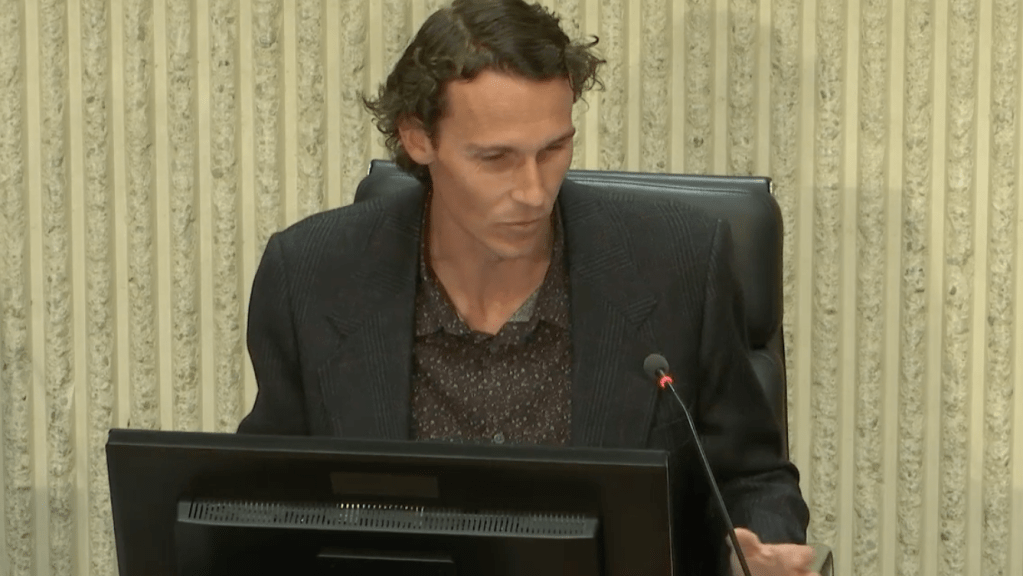
Ever ready with a thoughtful reply, fellow Planning Commissioner Jon Zich had this answer: “the way that I would try to answer that question would be to look at the opposite condition, and say, that if we had a hundred [cannabis] applications, processed them all, and we were raking in all kinds of tax dollars and not a single person came to the podium and said, ‘please stop,’ that’s what no problem would look like… in general I think the problem that we are trying to solve is that there are unhappy people with what we are doing.”

Chair Adam Ereth had a different answer to Vice Chair Toler’s question: “What I look for is stability, economically. It’s not to pick winners and losers, but to say like, what’s the point of even doing this in the in beginning, if we know there’s going to be so much competition where people are just going not to be able to make money, we’re going to see jobs turning over, we’re going to see instability across our city, if we just open it all up, everything, all the time.”
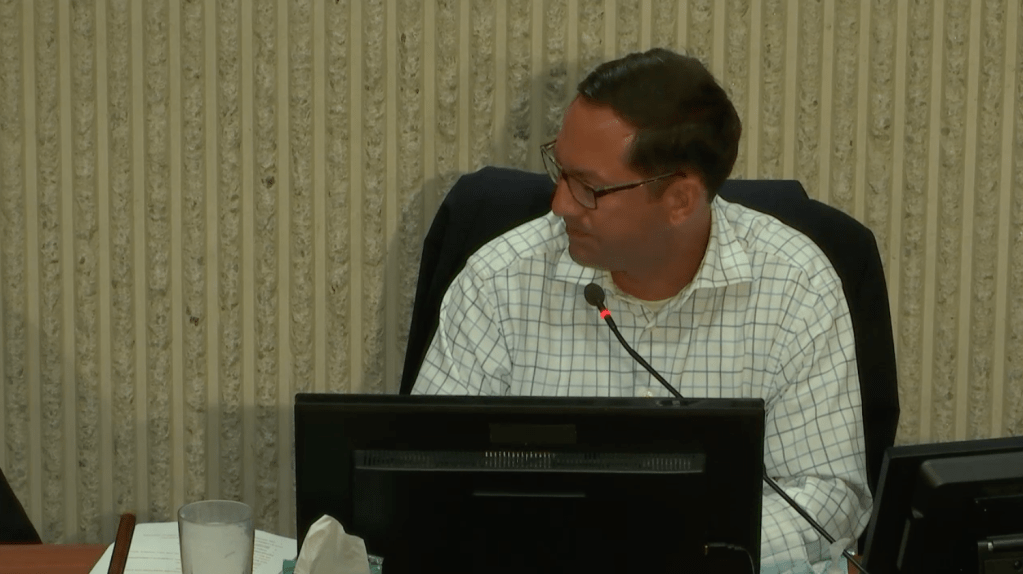
So between Commissioner Zich and Chair Ereth, we have two competing answers to Vice Chair Toler’s question:
- City government should solve problems that make residents unhappy.
- City government should solve problems that threaten the city’s economic stability.
So which is right? At the very least they are both necessary conditions to determine there is a problem in the first place: there is a problem because people are unhappy, or there is a problem because, theoretically, the status quo threatens economic stability. But are they sufficient conditions? In other words, should local government step in with a solution only because some residents are unhappy, or only because, on some economic theory, the rules may result in instability?
First, frankly, there are a lot of things that make residents unhappy. There are people out there who are so offended by the sight of dog feces left on the sidewalks that they would be willing to ban dogs in their cities all together. As a dog owner, in turn, I can tell you that such a ban would make yours truly quite unhappy. So simple “unhappiness” among some group of residents, especially when the proffered solution will make some other group equally “unhappy”, doesn’t seem to be enough on its own to qualify an issue as a problem that needs solving.
Now, critics would stop me here and ask, “certainly you aren’t suggesting that the local government shouldn’t be responsive to residents’ complaints, are you?” And I’m not. But in order for resident unhappiness to be a sufficient condition all on its own, I would add a couple of conditions: (1) that unhappiness needs to be reasonable, and (2) it needs to be shared reasonably broadly among all the residents. For example, I think we can all agree that a rule that said “no [insert ethnic minority group here] should be allowed to operate a business in the city” should be rejected out of hand, even if such a rule would make some (ignorant) residents happier, as complaints about a business owner’s ethnicity are facially unreasonable. Equally, it doesn’t make sense for local government to make rules simply to make a handful of residents marginally happier. The rulemaking literally would never end. So for the government to act on resident unhappiness alone, it should have some reasonable belief that either a large group of residents share a particular unhappiness or that most residents are neutral or indifferent to the proposed solution.
In this cannabis discussion, I don’t think we’re there yet. First, the neither the Agenda Report or the discussion at the Planning Commission went over the community’s experience with the existing cannabis sites. I am absolutely sure that some people have had negative experiences with our existing businesses; a recent op-ed in the Daily Pilot described one just the other week. But those experiences haven’t been comprehensively gathered or described. Commissioner Karen Klepak asked, for example, about whether other cities that have 600 ft buffers around youth centers have received complaints about them, but neither Jennifer Le or Scott Drapkin, the Director and Assistant Director for Economic and Development Services, had an answer for her about that.
Instead, what we do have in the record is anticipatory anxiety expressed by residents about cannabis. Many commenters discussing specific sites have complained about the perception of an area becoming a “cannabis row”, or the perception of the city becoming a “cannabis capital”, or the potentially harmfully alluring effects of cannabis on young people, or concerns about cannabis increasing crime. But whether those concerns are reasonable would be a question of experience and data rather than mere intuition. For example, several public commenters spoke in favor of adding the word “cannabis” to the signage of our dispensaries because there was widespread confusion whether some storefronts even sold cannabis. If most people aren’t even aware that our existing dispensaries are dispensaries, are the perception concerns reasonable? Addressing another issue, have we seen an uptick in crime around cannabis retail stores? Again, maybe those concerns are borne out by polling or crime data, but it seems strange not to interrogate this specifically.
And in this context in particular, it is important to note that aggressively addressing the unhappiness of a select group of residents may effectively become a moratorium, in that large buffers may eliminate all remaining sites. This would seem to violate the actual vote that approved retail cannabis via ballot measure. It seems unreasonable to ask for a rule that, for practical purposes, undoes a majority vote, at least in the absence of some clear change in broader public opinion.
Second, asking local government to step in to ensure economic stability for existing businesses is a tough ask. Chair Ereth’s concerns about the profitability and stability of individual businesses perked my ears. Is ensuring the economic viability of individual businesses really local government’s job? Let’s talk about what that would entail. Chair Ereth seems to think that too many businesses in a particular area will cause too much competition, that too much competition will result in business failure and layoffs, and that the Planning Commission is well positioned to judge the right level of competition in the open market.
Just looking at it from an economic perspective, I would think the entrepreneur, her investors and her lenders would be best positioned to make that call, such that they wouldn’t pursue a business where it didn’t have a decent chance to be profitable and successful. But even if I didn’t think that, it seems distasteful to suggest that the Planning Commission should artificially limit the number of competitors for any particular business so that it is profitable and stable. That might be nice for the businesses and their employees, but what about the consumers, many of whom are Costa Mesa residents? Competition, specifically the risk of failure and total loss, is what ensures discipline and maximizes value to the consumer.
That said, I think Chair Ereth is conceptually right that avoiding instability, rather than “unhappiness”, is a valid local government goal standing on its own. Chuck Marohn at Strong Towns endorsed a version of this view in an excellent blog post from a few years ago, writing that “in the public sector, we need people who are obsessed with stability, who shun risk with the recognition that local government is a platform for people to do good things, that the role of the city isn’t to grow but to provide the stable environment necessary for prosperity to emerge.”
I think Chuck is probably right here. But here’s the hitch: if Chuck is right, Chair Ereth is probably wrong in this specific case. The “city as a platform” view would not be concerned about the stability of the individual businesses or industries, but rather would be concerned about whether its rules were predictable, stable and fair. It is necessary to permit businesses to fail in order for prosperity to emerge (or else hundreds of years of market learning is incorrect), so making rules to ensure that existing businesses are stable counterintuitively undermines that future prosperity.
So, in summary: what problems should the city solve? The city should, of course, try to make its residents happy. But it must keep the long-term economic stability of the city as a whole as its lodestar. And if doing that might make a few residents unhappy, that’s the risk we have to ask our elected officials to take.
 Goat Hill Rodeo
Leave a comment