
“A nightmare”
“Liberal hogwash”
“A convoluted mess”
These are just a few of the glowing compliments that people have left on social media about the improvements to W. 19th Street. With all due respect to these commenters, I really do think the changes are improvements, and big ones at that. But given the angst on social media I think it is worth taking some time to discuss why, and what problems still remain. So you’re getting a two-part essay.
First — some background. In late 2023, the City repaved and re-striped W. 19th Street and Placentia Avenue. As part of that project, the City attempted to implement “complete street” elements, including adding buffered bicycle lanes and green bollards. On Placentia, the changes to the roadway were mostly cosmetic, though the lanes were narrowed a bit to accommodate the bicycle lanes.
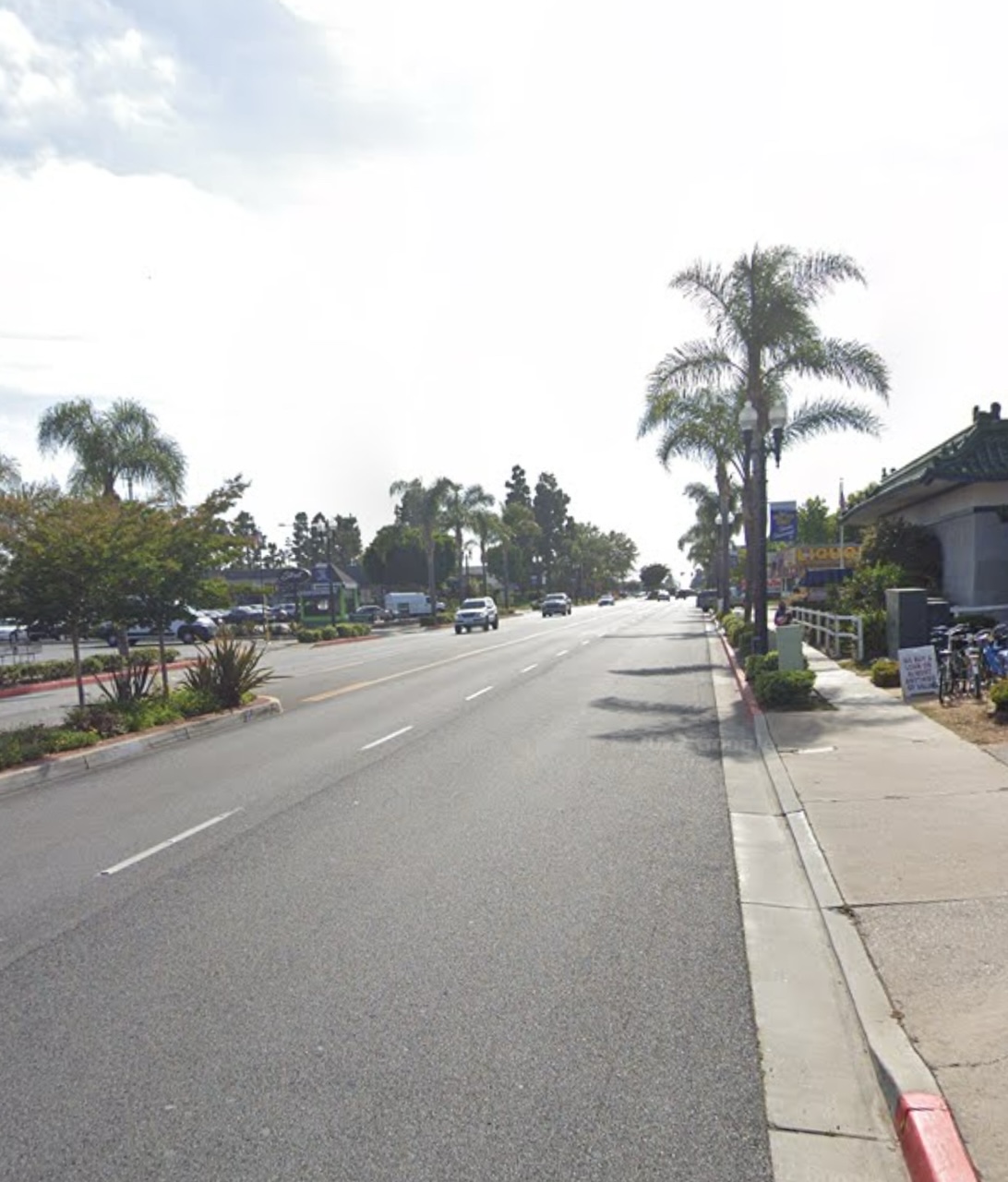
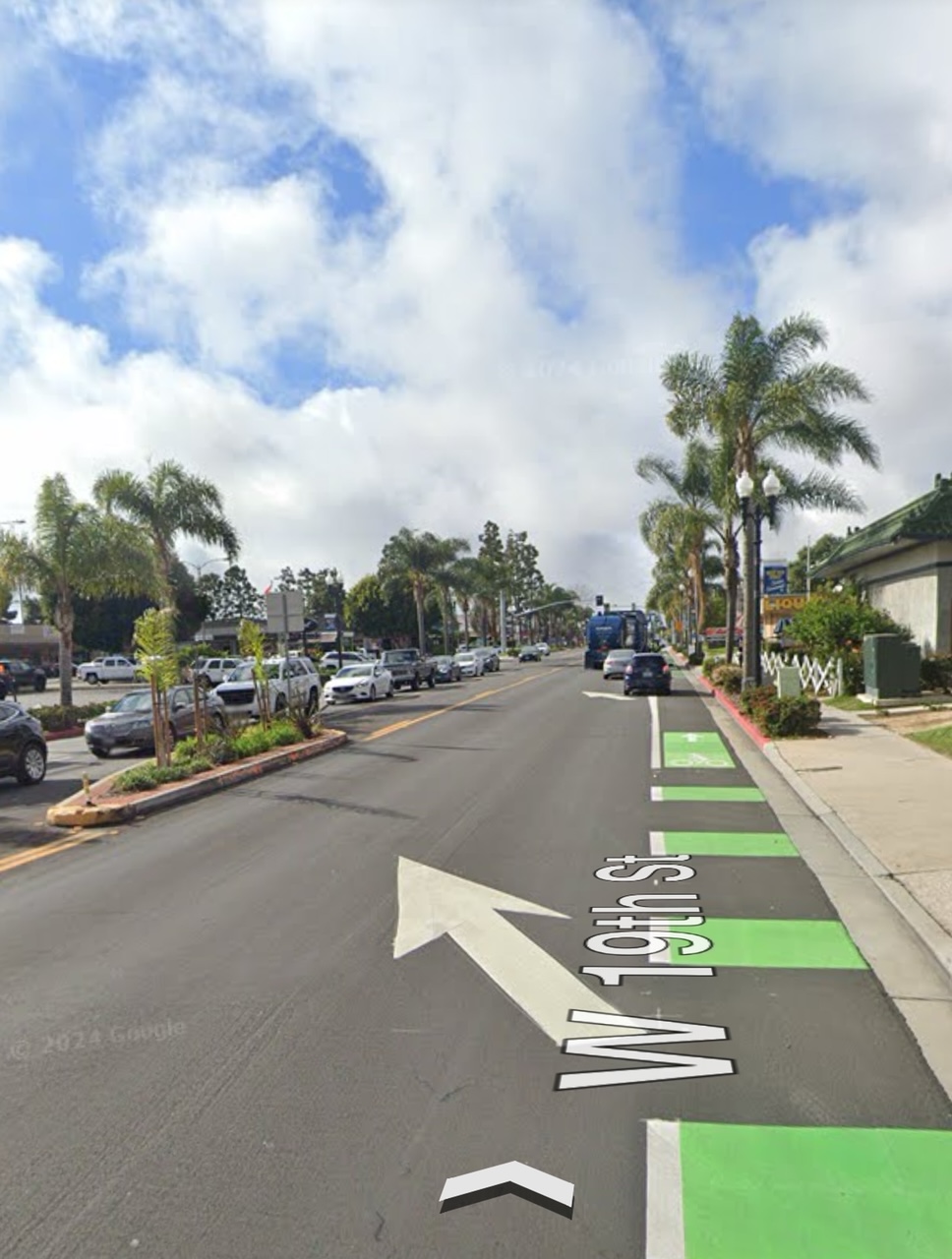
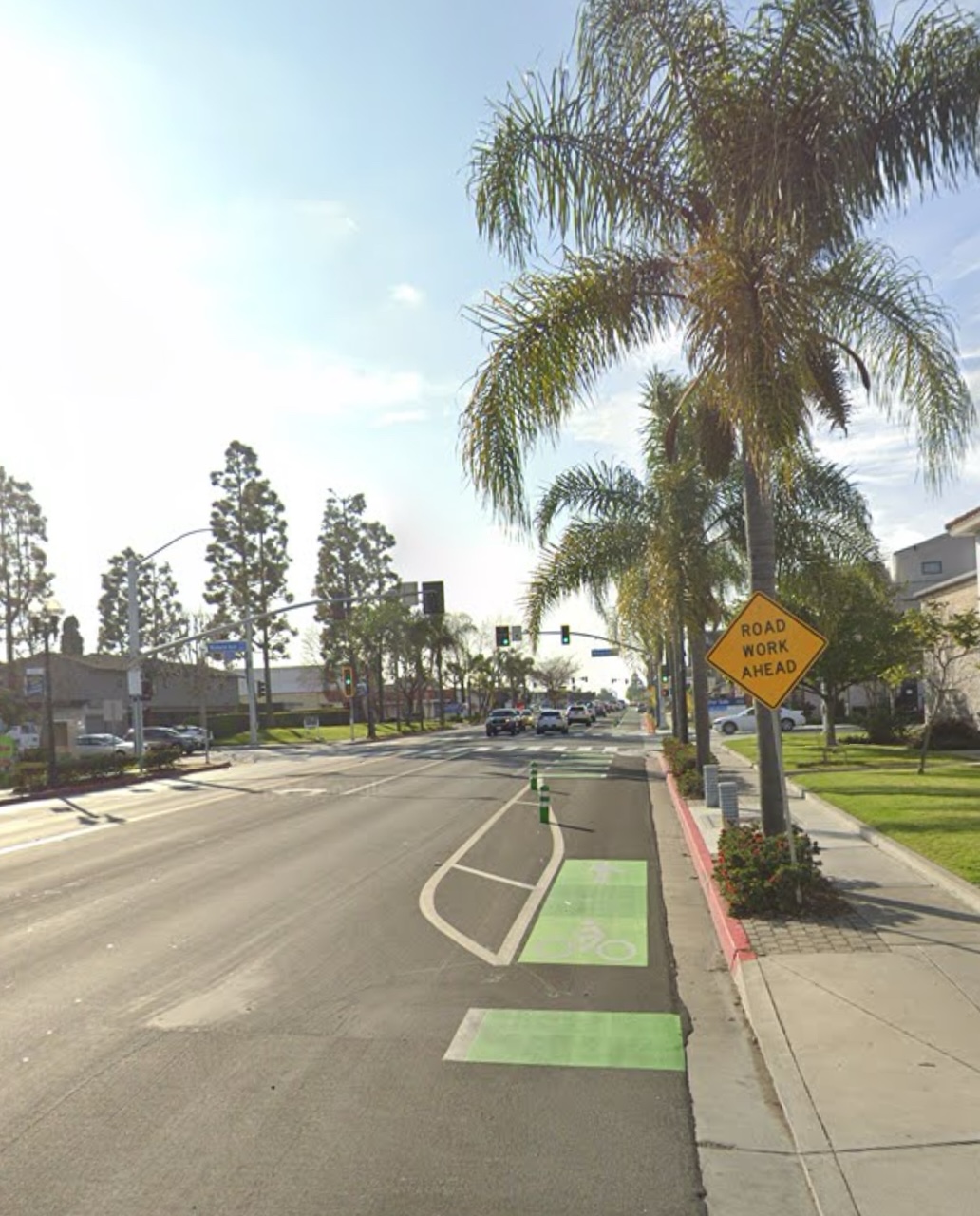
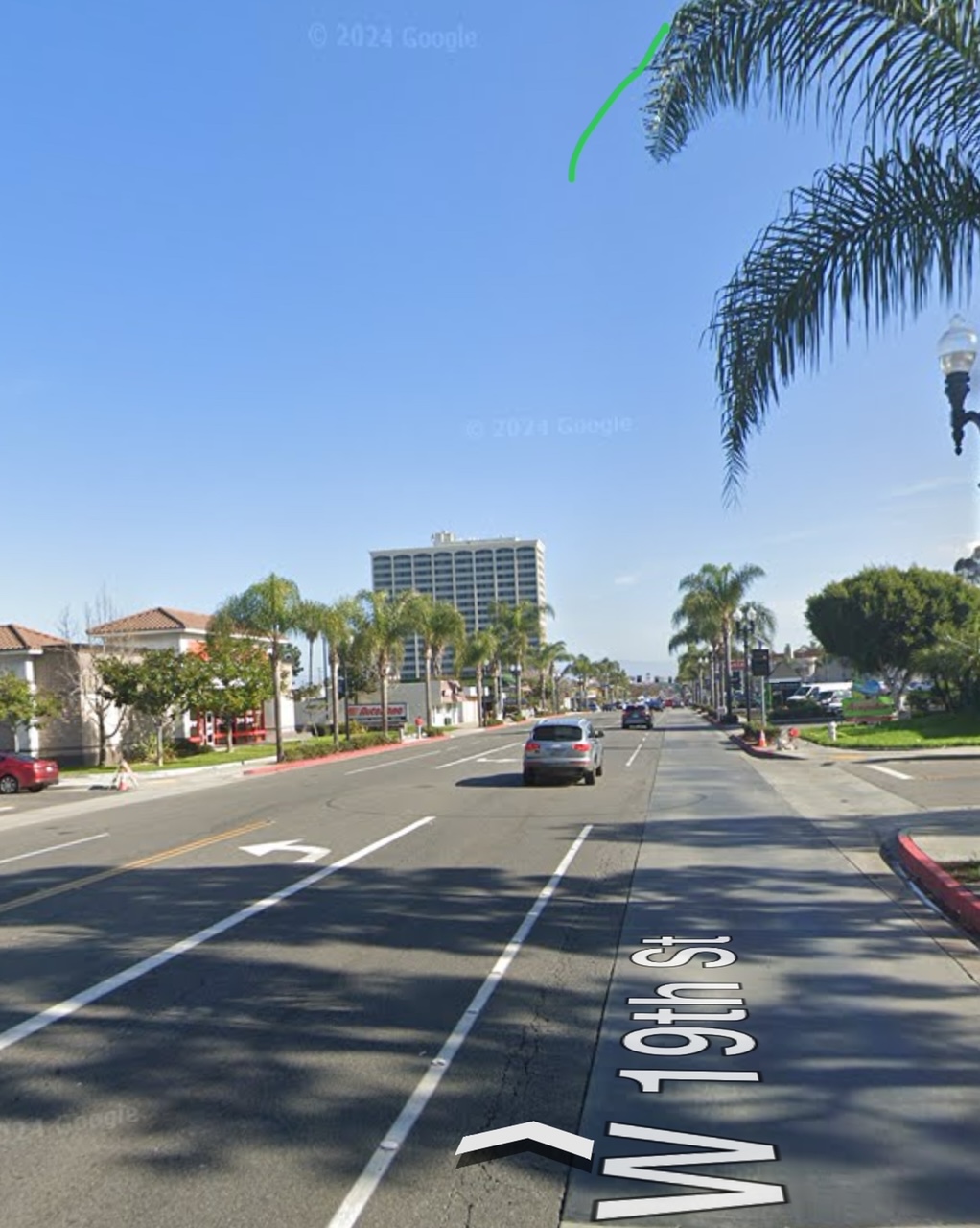
But on W. 19th Street, which is a tight street with lots of competing demands from homeowners to commuters to commercial businesses, more significant changes were made. To fit in the buffered and protected bicycle lanes and the pedestrian-friendly bulb-outs at the intersection of W. 19th Street and Placentia Avenue, the reduction of W. 19th Street from two lanes to one lane had to be pushed further east. So now, instead of traffic merging after Placentia Avenue, it had to merge between Pomona Avenue and Wallace Avenue:

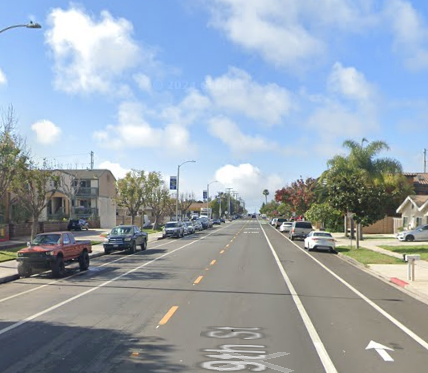
Furthermore, going West from Federal Avenue, the center turn lane had to be removed in order to maintain the on-street parking (an absolute deal breaker for the adjoining residents and businesses) and accommodate the extension of the bike lanes:

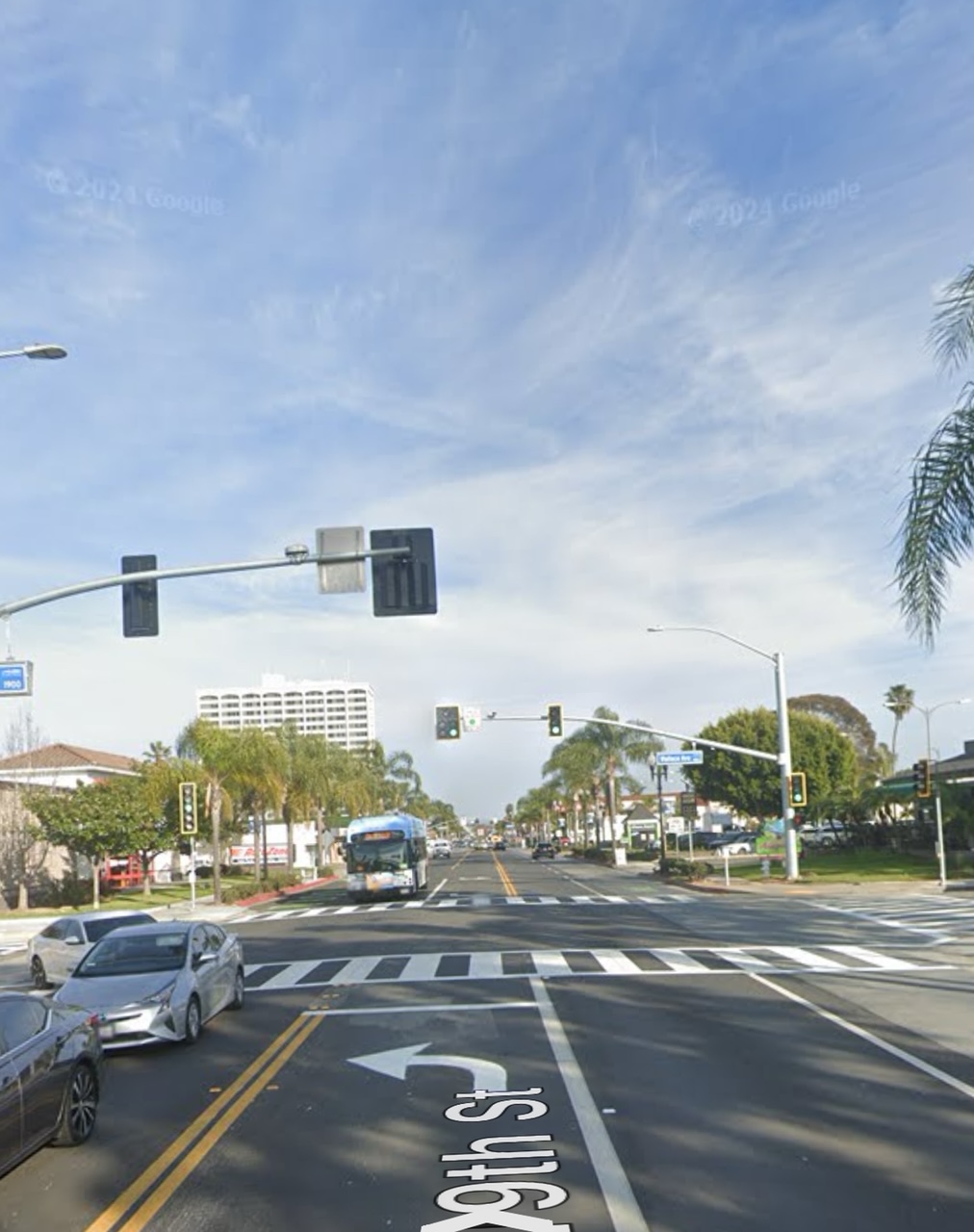
And finally, although this change was not part of the original repaving and re-striping effort, the City also installed a new traffic signal at W. 19th Street and Wallace Avenue, which included high visibility crosswalks and leading pedestrian intervals (that’s a signal quirk that lets pedestrians have a few seconds head start on the green light going the same direction, which has been shown to improve pedestrian safety):
So why make changes to this street in the first place? Wasn’t it already perfect? Or at least good enough?
No. And far from it. And that’s for two simple reasons: (1) it was not a safe street, and (2) it could not reach its potential as a community asset. Those are fatal flaws that must be addressed immediately when encountered in any city street, so in many ways, the action by the city is long, long overdue.
Was W. 19th Street “safe?” Here’s a test: if you only ever imagined going through it wrapped in 2 tons of steel, it probably wasn’t very safe for pedestrians or bicyclists.
The Public Works department really, really hates it when residents say one of its facilities “isn’t safe”, because that attaches all kinds of liability (legal, political and otherwise) to everything that is said next. But while I’m sure W. 19th Street prior to the recent changes met all the technical requirements of safety — it had proper clear zones, the the speed limits conformed to the 85th percentile speed, everything was executed according to the letter and the spirit of the Manual on Uniform Traffic Control Devices, a.k.a., the Bible of Traffic Engineers, etc. — from a layperson’s perspective, it didn’t feel safe.
What I mean by that is that it wasn’t very comfortable to walk down the sidewalk with heavy car traffic zipping by at 40 mph. It was — and to some extent, still is — the kind of street where, at intersections, you had to put your hand out, wave frantically and make eye contact with oncoming drivers to cross with a walk signal on a solid red, just in case the driver was going to try and hop the light. And you would never, ever want to let your child ride her bike there, although many parents did because driving their children to school or lending them a car was economically or legally out of the question.
Unfortunately this perception of danger was also backed up by data. It’s supposed to be a big deal when one person gets hit by car. In the span of 3 years, we had 19 people walking or bicycling get hit by cars on W. 19th Street between Anaheim Avenue and Monrovia Avenue, a stretch of less than a mile.* Almost all of these collisions caused injuries to the people struck walking or bicycling, and the group included both seniors and children.
So did the city’s changes work? So far, the data has been encouraging: since the bollards were installed on W. 19th Street there have been zero pedestrian or bicyclist collisions with cars reported to the CMPD on this stretch. Obviously we’ll need several more months, or even years, of data to draw any firm conclusions. But I’ve both bicycled and walked down W. 19th Street since it was updated and I think it feels much better. Not perfect — I’ll get into that in Part II — but definitely an improvement.
W. 19th Street’s most difficult design problem: it’s a small road that wants to be a big street
Whenever I look at W. 19th Street, the first thing I think of are the glossy visions of the street that city planners had waaaaay back in 2006 when they adopted the W. 19th Urban Plan. Back then, the drafters darkly intoned that an overhaul was necessary because the street was rife with “incompatible land uses” and suffered from “high demand for services from concentrated problem areas” that that these problem areas “often tend to spread”. In contrast, the plan envisioned replacing the existing developments with shiny, mixed use commercial and residential buildings that would come right up to the street. Developers would be enticed to embrace that vision by beautification projects that would add decorative pavement, fancy street lighting and improved bus shelters.
Unfortunately it didn’t work. At all. In fact I believe there has only ever been one development since 2006 under the W. 19th Urban Plan, which was the handsome little brick mixed-use building that went up on the corner of W. 19th Street and Wallace Avenue. I think we can pretty much declare a plan a failure if it fails to spur any meaningful investment in almost twenty years.
So what went wrong? As much as I love to blame Measure Y for the City’s development woes, I don’t think that’s what at play here. There are a lot of challenges to redeveloping plots along a street like W. 19th Street. But in my opinion, one of the toughest problems is that high vehicle speeds simply make it uncomfortable to walk down, which makes the value proposition of developments that interact directly with the street less appealing than they ought to be. And no amount of decorative pavers or baroque street lights will fix that.
So are we serious about wanting to transform W. 19th Street into a highly valuable, mixed use neighborhood with a walkable street at its core? Twenty plus years on, it’s fair to question our commitment. In fact, I would suspect that some people would rather maintain W. 19th Street’s throughput at all costs, even if it means that it will never, EVER evolve beyond its current state as a less-desirable, drive-thru dominated strip where people are hit by cars every couple months.
But if we are serious about improvement, we absolutely must redesign the street. There is no way around this. As neighbors noted over a decade ago, vehicle speeds make this street unsafe and unpleasant. But unlike the city officials back then who thought a speed limit reduction from 35 mph to 25 mph might address that problem — a reduction that, by the way, never happened — we know better. We can’t reduce vehicle speeds by fiat. We have to change street geometry. Otherwise, speed limit reductions aren’t just ineffective: they’re also dangerous.
So the traffic engineers didn’t chose to make these changes because they hate cars and the people who drive them. It is because slowing down traffic improves safety, which in turn improves the perception of safety, which in turn makes the street a place people want to be, which in turn supports new kinds of developments that don’t hide behind a sea of parking. Or we can just sit around hoping that all those things will change without doing anything. Probably for another twenty years, or more.
So: did the city get it right? I discuss that in Part II.
* The CMPD was kind enough to send me the pedestrian and bicyclist collision reports since 2021, and it’s pretty clear the three quarters of a mile on W. 19th Street between Anaheim Avenue and Monrovia Avenue are over-represented in our collision data. This tiny stretch saw 7 collisions between cars and bicyclists/pedestrians in 2021 (all but one with injuries to the bicyclist/pedestrian; four of the pedestrians/bicyclists were minors; one of them was a senior (65+ years old)), 8 collisions between cars and bicyclists/pedestrians in 2022 (all bicyclist/pedestrians were injured; two pedestrians were seniors, one collision was a felony hit-and-run), and 4 collisions between cars and bicyclist/pedestrians in 2023 (all but one with injuries; one was a minor and another was a senior). And those were just the incidents that were reported to the CMPD; it doesn’t count the close calls and brushed off minor collisions that didn’t require police involvement.
 Goat Hill Rodeo
Leave a comment