
Want to listen to this interview? Check it out on the Goat Hill Rodeo Podcast.
*** Begin transcript ***
Jenn Tanaka
So today I’m sitting down and talking with Cara Stewart, who is running for District 3. So welcome, Cara.
Cara Stewart
Thank you so much for creating the space for all the candidates.
Jenn Tanaka
So I’m just going to jump right into it. The first thing I’d love to hear about is: tell us a little bit about yourself and, why are you running for this [seat].
Cara Stewart
My name, as you said, is Cara Stewart. I’ve been a resident of Costa Mesa for about 10 years, although I grew up visiting here from different family and parents’ friends. And my background is that I’ve been kind of a lifelong public servant without ever even having that understanding of what that term meant, and a lifelong follower of government.
[Photo credit: Cara Stewart for District 3 Campaign]
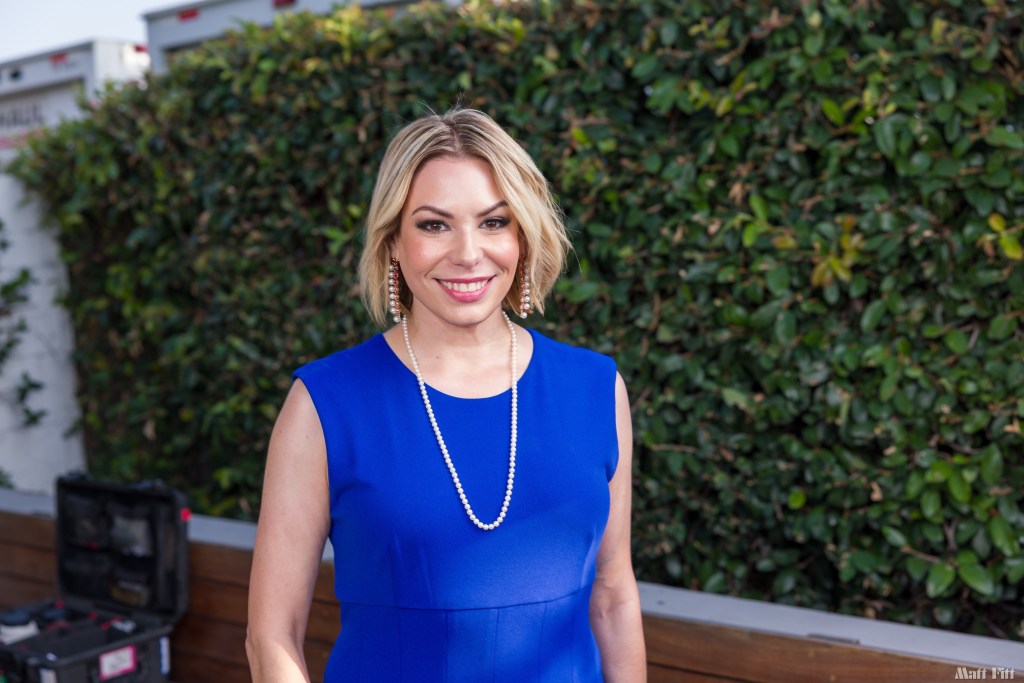
I started my career as a reporter with the Orange County Register – that was in the 90s –- and I covered the Orange County bankruptcy. And I also covered the cities of Buena Park, La Palma, the school district there, and the special district for the library. And I saw firsthand what happens when there’s a lack of government accountability, government transparency. And on the flip side of that, that local government really is the heart of day-to-day lives for people.
And it was a full circle for me, because growing up in a small business family, we were a trades family. We had a glass shop. So, you know, installing commercial glass, autoglass, and all of that. And [I] used to go to different cities with my dad and granddad as they pulled permits. So kind of understanding what I saw as a child and how it realized in day-to-day life.
Then I went off into a corporate career, [I] learned more about national, international [issues].
And then it kind of all came home 25 years ago when I started my own business. And all those things of what I saw for accountability and transparency, and the understanding of having to make a bottom line and be accountable to your employees, your community, your clients; those things have to be pursued with a longer term impact, not only managing bottom line day-to-day, but taking care of the people around you and planning for the future.
So when I started volunteering here in the city, I kinda looked at a cross-section of what were the immediate, most important needs, what did I think I’d be good at based on my background, what were my individual passions?
And so [I looked at] many nonprofits, at the soup kitchen. My first appointment for City Council was on the Fairview Park Steering Committee. And after that into the Animal Services Committee; I’m the chair now.
I think all of this gives really good background of how government works because, also during my career, I was the public information officer for Anaheim Public Utilities. So, you know, understanding the government appointed side of it, the staff side of it, and then what it means to be a leader all totals up into, I believe, why I’m a great candidate and [why I would] be good up there on the dais.
And why I’m running right now – I think this is an incredibly critical election. This election is going to reshape Costa Mesa. We have a decision of whether to go back into the future, of candidates that are backed by previous council administrations that took the city into what I believe is the dangerous direction. Or are we going to continue on the, I believe, positive pathway that we’re on? Albeit, there’s lots of things that I would have changed or done differently in hindsight and lots more work to do. But that’s why I’m running at this time.
Jenn Tanaka
Thank you for that. I’m going to just dive into some questions to start with that are specific to District 3, and then we’ll kind of zoom out to the city generally.
But starting in District 3, one thing that might surprise people, and it certainly surprised me when I looked at it, is that the Fairview Developmental Center is technically in District 3.
And, you know, I know you know a fair amount about this issue, but to catch people up: the Fairview Developmental Center is about a 100, 110-acre property that’s nestled within the Costa Mesa golf course off of Harbor Boulevard. And it used to be a state-run facility, and the state still owns that land. But the state has provided funding to the city to craft a specific plan to build out, amongst other things, a significant amount of affordable housing.
So one of the core tensions of this process, as I’ve observed it, is how to balance the needs of the current residents who live here in Costa Mesa with the potential needs of many future residents, as the current plan expects quite a lot of housing to be built there. As a potential City Councilperson, how do you view that balance between thinking about who currently lives here and who might live here in the future when looking at these kinds of big development plans?
Cara Stewart
I like looking at that a little bit differently, because I don’t believe that it’s an “either-or”. I don’t believe it’s about balancing the needs of the current residents with balancing the needs of the future residents. Anyone in Costa Mesa is going to need the same things: safe access and safe roads, affordable housing, the right infrastructure so that if you, you know, turn on the Harbor [Boulevard], it’s not so onerous because of traffic. It’s safe. We’re going to need the infrastructure of good parks and appropriate Fire [Department] response and [Police Department, or] PD response.
When people talk about a new development harming them today, I think they’re worried that those things wouldn’t come into consideration or they’re thinking that, “hey, we’re already lacking in these things. How is the city going to be able to create that?” So I think by tackling some of those issues today for current residents, we also can be creating the right kind of infrastructure plan and processes for the future as we look at things like the Fairview Development Center. That one is a particularly gnarly, gnarly, thorny issue. I don’t think anyone wants that project to be as it’s scoped, but we have very little control over it.
What we do have control over though is what the City Council did ultimately decide on, and I spoke about during those public comments, is: we need affordable housing. Where do we put it? And not only needing affordable housing, we need the green spaces around it. We need to make sure that there is safe access. We need to make sure that families and seniors are protected and they’re having what they need.
As I spoke during my public comments, though, it is worrisome to me that we’re looking at [Fairview Developmental Center, or] FDC as a one-and-done thing. It’s not. Just because we’re developing that and the state’s getting involved and whoever knows what builder is going to come in and what’s this going to actually look like, it is folly to me to think that we can’t then start looking at the adjoining area and bigger there.
We are going to need massive infrastructure changes for the future of Costa Mesa, regardless. It’s a source of pride that people want to live here. It helps our economy, it helps our small business. Saying that we already have too many people and trying to turn them away, I think is a very dangerous ideological precedent because you’re actually harming the future growth, which does impact residents today. You know, so I talk to so many families that are hoping that their grandkids will be able to move back here after college or that their kids are going to be able to grow up and have the same kind of experience that they did growing up here.
So if we’re not talking about the needs of today as well as planning, we’re going to get into another cycle of the City Council making decisions that sound good in that moment for that particular council cycle, but actually are giving us a bad check that we’re not going to be able to cash into the future.
Jenn Tanaka
Do you believe that the Councilperson who is representing District 3 has a special responsibility to bring that larger picture perspective to something like the Fairview Developmental Center project?
Cara Stewart
I do. And the fact [is] that, any district representative is always having to do two really important tasks is: you talk about the here and now. So the here and now is listening to the residents’ concerns. Anything from – let me give you a perfect example, jump jumping across our topic but – you know, there was the new bike lane that was installed exiting El Camino [Drive] onto Adams [Avenue] and Fairview [Road] just recently and it reduced [two] vehicular lanes to one. Well, it ended up causing so much of a backlog and traffic and actually harmed local residents. So we needed to get involved to get that fixed. That’s an immediate need of a City Council member representing a district to take care of right now.
But you can’t be myopic being in that role either. You have to think about how the district plays into the larger city and how today’s decisions plan into future generations. And so it does take that perspective of someone who’s going to roll up her sleeves or his sleeves and get something done today, but also being pragmatic and wisdom-based enough to be able to help shepherd those conversations for everyone, the Council, and get everyone working together, so we can have that kind of generational look at the city and decisions.
Jenn Tanaka
Well, you touched on the roads. I think that’s actually a great segue into my next question, which is that there is another Fairview that has, I think, been top of mind, certainly for me, in looking at the issues that are facing District 3, and that is the rehabilitation of Fairview Road. And Fairview Road, for those who are not familiar with District 3, runs pretty much straight through the middle. And the stretch from Newport Boulevard to Fair Drive saw pretty significant changes in the last year, including reducing one lane in each direction, adding bollard protected bicycle lanes, adding bus islands, and also adding a protected cross signal near College Park Elementary School. I would be curious to hear how do you think this project fits into where the Costa Mesa street grid is at the moment, and maybe where it’s going?
Cara Stewart
Yeah. I think it is a progressive move for our city. We have to be looking at this issue not as cars versus pedestrians versus bicyclists versus anything else that’s going to come into the future. We have to just understand people need to move safely, period. Whether they’re in a vehicle, they’re walking, they’re pedestrian. And by having different modalities on that street, it gives everyone the access to the same equitable kind of safe passage.
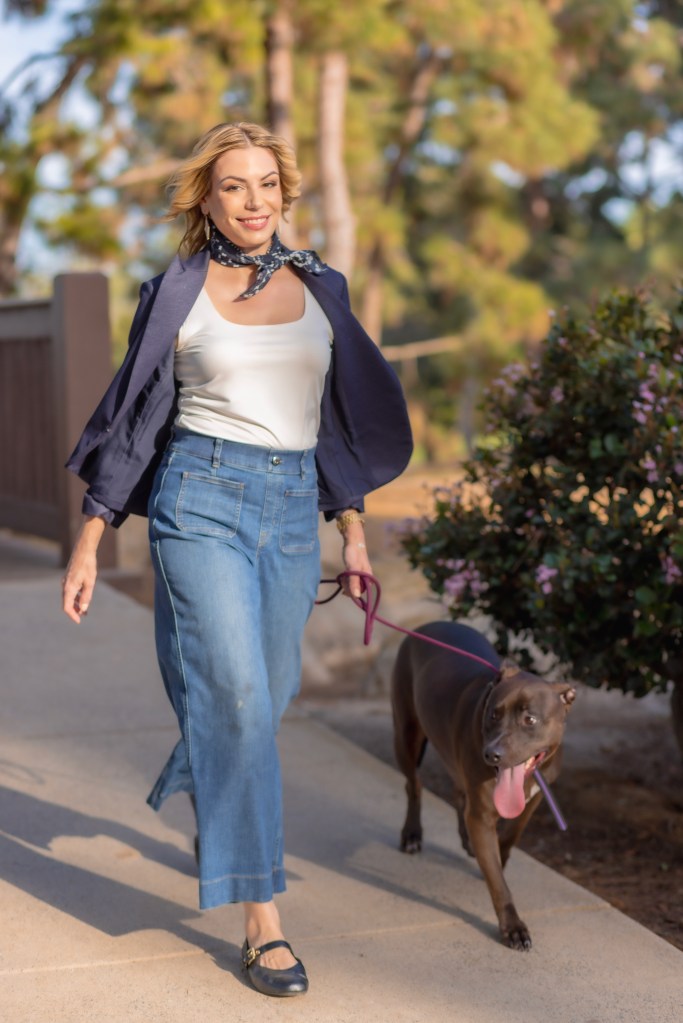
And that’s really what’s important. We also look at this as behaviors are changing. We used to be almost entirely car-based, and there wasn’t a lot of thought of: people are going to commute to work on bike, or we need to have better relationships with [the Orange County Transportation Authority, or] OCTA. Now we’re thinking holistically of that, and we’re making stabs to do that. We’re not getting it all right right now, but we’re doing something, and there’s an opportunity for that iterative process of we keep learning from it.
And we also do have to think about, you know, a little bit of future casting. I don’t think that we’re going to go back to where we were pre-pandemic, where the crush of everyone going to an office for 9:00 to 5:00, or students always being in a classroom at the same time. We have to be considering that most of our city is not going to fit in those hours. So, what is the total traffic pattern? What’s the total movement pattern? And have a little bit of a crystal ball to think of where that’s going in the future.
[Photo credit: Cara Stewart for District 3 Campaign]
But it also takes us working, the city working with other like OCTA better. It also takes into account better communications throughout the city. You know, what are we doing with [Orange Coast College, or] OCC? What are we doing in conversation with them? But even the major businesses that are along there, schools that are along there, parent groups that are along there. Like, you know, having – though it’s not in that same corridor – the bike bus organizers. We all play a role in making sure the city moves safely. And I don’t think, while the city can take the leadership role in that, it’s not up to just one entity. And the beauty of local government is [that] we have a role in it.
Jenn Tanaka
So you mentioned that with respect to the Fairview Road improvement, that we aren’t necessarily getting it all right. I would be curious if the Public Works Department came to you with a proposal for another project in District 3 that maybe was of similar scope, what you maybe learned from the Fairview Road experience that you would inject into the process to improve it the next time around?
Cara Stewart
Don’t laugh at my answer because of my background in communications, but as a city, what I really hope we can accomplish in the next few years is a better infrastructure of communications. There was a lot of confusion over what that project was going to be. And because of that, you know, it’s just human nature – when we’re not communicating the way people need at the time that they need, where they are, it instills fear.
It provokes this belief that it’s us against them. and these things really don’t have to happen. So we heard the other night from FDC, I think it’s true of this issue, and so many others – we need to get the public involved earlier on in the process, have more form of a participatory government, citizens advisory committees, not just even about particular, one particular taskforce issues, but make them part of like the third leg of this the stool, which is, you know, the City Council, city staff and the consultants, and our constituents. So we’re all coming up with identifying ahead of time what our issues are, forecasting how to plan them out, getting them involved early on in it.
And I think the days of that kind of town hall, we’re going to have a consultant speak up there and all going to sit in an auditorium and talk, is so far behind us. We need to be going to parks, to schools. We need to be having me meet-and-greets in people’s homes. You know, utilizing modern technologies and be able to reach [the constituents] where they are at the time that they are. And that’s how we break down these silos so people feel like that they have vested interest and that the city and the staff is listening.
Jenn Tanaka
And I’m going to present to us another “either/or” that may not actually be an “either/or,” but: let’s take the goal of better communication, do you view that as something that is the responsibility of the staff in the sense that the City Council should direct staff to do a better job with communication? Or is that something that the City Council member themselves needs to take on as a responsibility? Or maybe both?
Cara Stewart
All. Yeah, all. And I don’t say that glibly because a lot of work to do that, and it also takes dollars to do that. You know, one time I was out canvassing recently and one constituent asked, “well, if you’re elected, will you start a newsletter for all of your residents?” I said, I would love to do that, but, I don’t know if you know this, but Council members don’t have staffs. We don’t have our own communications team. Other cities do, like the city of Irvine does. And so I promise to do this as much as I can.
But that’s kind of where we go back into this idea of – I have neighborhood captains right now to help me with canvassing and communications. I would love to turn that into permanent roles where we have everyday residents and business owners stepping up to, “I’ll take this block and make sure the neighbors know that what’s happening is next week.”
But it can’t just be me and a handful of people doing it. It has to be institutionalized. So that’s where the City Council can come in, working with [the] City Manager and staff to make that there. And yeah, it might mean that we need to increase staff size at the city or we need to reorientate certain people’s roles into being more constituent-focused, communications-focused. But in the long run, it’s going to prevent a lot of the problems that we’re having, actually save us time, which is going to save us a lot of money.
Jenn Tanaka
I’m going to shift a little bit to a different area of District 3, which is that, one thing that strikes me about it is that it has some of the most vibrant residential neighborhoods in the city, and I say that as an Eastside resident, but they’re wonderful.
Cara Stewart
Every part of our city is so cool, but you know I am a little partial to mine.
Jenn Tanaka
I understand. But you know, you have College Park, you have Mesa Del Mar, you have the Monticello community, you have all these incredible residential neighborhoods –
Cara Stewart
Let’s not forget [District 3’s] little sliver of Eastside.
Jenn Tanaka
Exactly – the Eastside as well, that’s right. And these residential neighborhoods, however, can feel pressured sometimes because there are also really incredible attractions and amenities that are located in District 3. Like, for example, you have Orange Coast College, you have the Jack Hammett Sports Complex, and probably the foremost among them, you have the Orange County Fairgrounds. And I wanted to hear your thoughts on how the City Council and the city generally could help District 3 deal with some of those pressures. Kind of describe what you think they are, maybe, and then, you know, maybe how we can address them?
Cara Stewart
And I think that while we can look holistically at the district as this set unit, you said it best – each of these neighborhoods are so different and really do have different needs, and we can’t do one-size-fits-all for them.
But let’s take the issue of the [Orange County] Fair. That produces enormous economic development opportunities for us here. I mean, the throng people coming in, visiting our restaurants, spending dollars here in the city – we want to welcome that. But we want to welcome that in a way that doesn’t impede day-to-day life. So a little bit of upfront communication and coordination. One of the things I want to do if elected is work with the [OC Fair & Event Center Board of Directors, or] Fair Board, who actually has Michelle Murphy on it now, who is also our school board trustee for our area.
But she was specifically elected to the Fair Board. One of the reasons is because she lives in College Park. So we can give, you know, a truly neighborhood view of what is happening and work with them closer. That’s working with our own police department. But also things like that is again, I’d I think that the city is the organizer, like a hub-and-spoke model, but it takes a lot of us to be able to figure this out. There’s great coordination right now with the two churches that are nearby for overflow parking, working ahead of time to try to reduce some of the traffic in there, some messages of better coordination with OCTA, understanding peak times so that we are not having a throng of traffic.
The other thing that was really problematic with me living in Del Mar is people were cutting through our neighborhoods, and not only cutting through – cutting through as if they were still on the freeway and speeding. So, you know, maybe you were working with traffic at that time to put up barriers or ways to narrow the road.
And it used to be that you can work with many of the map services companies to make sure that they weren’t rerouting people through neighborhoods. I don’t think that’s happening at the same rate, largely because of all the tech consolidation and you’re kinda dealing with one entity which is Meta, which really just doesn’t care about us. But you know, trying to work on some of those things as well, and then I’ll default back: communication solves a whole lot. So if we can work ahead of time, with different groups, residents’ groups, to look at some of these issues, we wouldn’t be as impacted as much.
Jenn Tanaka
I’m going to move to a slightly different question, still kind of touching on those amenities, which I think are really special in District 3. I noticed in a recent Parks and Community Services Commission agenda, the city released the results of a survey that they had done at Concerts in the Park. So at Concerts in the Park, they had asked anyone who came up to the booth a variety of questions relating to the parks in the city, which I thought was a great idea.
And one of the questions they asked was what park-related improvements residents most wanted to see. And as you could probably guess, the answers were all over the place. But the kind of modal answer, the answer that most people said that they wanted, was sports courts and playing fields. Yeah. And District 3 already is somewhat of a hub for this. They have Orange Coast College again, they have Jack Hammett again. They also have Costa Mesa High School, which hosts a lot of youth sports leagues, but – where is finding more structured recreational opportunities, like playing fields, like sports courts, on your priority list?
Cara Stewart
It’s high because it is, you know, I kind of have a belief that, if we’re taking care of families, we’re taking care of every generation. And being able to have families have access to green spaces, to athletic fields solves a lot of problems and creates the kind of community they want. You know, there’s the health investment in kids there, there’s the family bonding time. It could be a revenue generator for the city as well.
But we need to make sure we’re doing, I think, a few things. One is the spaces that we have right now – are we maintaining them? Many of them don’t have lighting at night. And I actually just met with a couple of constituents this week. They weren’t even in my district, but they live in here in the city, that prior to 2020, the city greenlit funding for a feasibility study to get nighttime lighting at our parks, at our sports fields throughout, and how we would work with Newport-Mesa Unified School District to have more joint-use cooperative agreements with them to be able to use their sports fields and/ or athletic fields.
My understanding is the funding for that feasibility study was cut because of the pandemic. Okay, well, [I] fully understand that we were in crisis. Well, it’s six, almost seven years later. We really need to push that back forward so that we are improving what we already have and maintaining them correctly, so we can have more of these spaces that are already existing being utilized at night and on weekends in a better way.
Two is, let’s revisit discussions with the school district to see how we can have more joint-use agreements there and better and timely ones.
And then three, this goes back into that generational planning. We know if we’re doing right, our population is going to grow. But if it grows with the right infrastructure, it’s not going to feel like, you know, what people worry about, that we’re just so crowded like downtown LA, or it doesn’t have our flavor – it’s done purposefully.
So we do need to be planning, and I am disappointed there isn’t going to be more green space at FDC or an athletic field there, but this is where Costa Mesa can do its best. We have always been kind of a creative, innovative city. We’ve never done it the same way as Irvine or others, we’ve done it our own way. It is unimaginable to me that we can’t sit down and look at a 25-50 year plan. While we don’t have a crystal ball, we know what we’re going to need. We are going to need more athletic fields. We are going to need more, the right kind, of housing surrounding it. Why can’t we map out our city now for that? Even if we don’t know how we’re going to fund it, even if we don’t know what that’s going to look like, having the plan in place, then we can be able to execute.
Jenn Tanaka
As a sitting City Councilperson, what would leadership on – and this is just to use this issue as an example – what would leadership look like? Like, would it be fighting for a line item in the budget to ensure that you have funding for these things? Would it be starting your own initiative? Would it be being the liaison to the school board on this issue? Like, what would it look like to you?
Cara Stewart
See, that’s the complexity of this role. It can’t be one or the other. It really has to be a balance based on the priorities there. So yes, a line item right now is the here and now. Those have to be addressed and we have to fight for those. Like, although it’s a small investment, I would fight right now for that feasibility studying for lighting on athletic fields to be there. Very small. You know, it’s a drop in the bucket when it needs to be, but it’s kind of an immediate win that would help us have some more data points where we’re going toward that bigger picture, the long-term study of what we need.
In conjunction with that, is again, it’s not my philosophy that the City Council goes it alone, that staff goes it alone, but is being able to bring all these constituent groups together, all these stakeholders together around the table. That’s where I think my background in journalism, in building companies, in nonprofit work, in coalition building, really comes together. Because I am adept and have a lot of experience of leading, not from my own agenda, but mapping out: this is the vision and this is the destination of where we need to be. We don’t have the answers of how to get here, but I bet sitting around this table, if we meet often enough and are committed to that, we can get there.
And yes, I would view that as my role and I think that there has to be a greater coalition. As much as I think our City Council has done a great job, government has gotten into silos. And we need to break those silos.
Jenn Tanaka
And then kind of zooming out from District 3 a little bit and thinking about the city as a whole, I was reviewing this summer a poll that the University of California at Irvine released surveying Orange County residents. And the subject of the poll was asking them a variety of different questions about their government, but particularly they were interested in how much do the residents trust different levels of government.
And one of the levels that they asked about was local government. And the poll found that only four in ten of Orange County residents said that they had a little bit or a lot of trust in their local government. So taking that result, I was curious what your reaction was to that, and also, what you think maybe the biggest thing the City Council could do to build public trust?
Cara Stewart
I’m really glad you brought that up. I’ve forgotten the researcher’s name, but I was at the Orange County Business Council event where they debuted that [study] and got to hear it as they were, and you could hear like, murmurs in the room – this is [a room] with a lot of public affairs people and government relations and electeds – and you could hear the, “[gasp], we didn’t realize it was that bad.”
And if you dug deeper into the data, it was even worse if you look at the generational breakdown. You know, the older generations who maybe have had in the previous [poll], a neutral to favorable [view of local government], still felt like they had a voice. The younger you got, the more it became all of this nihilistic, “government doesn’t care about us. It doesn’t even matter that we participate.” And that was crushing and heart-wrenching.
But I think that’s happening. I think it’s happening for a few reasons. Some we can tackle and some we can’t. The national political scene is abysmal, and it is provoking this division that doesn’t need to be there. And it’s trickled down all the way into local government. So this partisan bickering, I think, has, while some people feel like it’s just part of the game, people are becoming addicted to rage.
People are also believing that nothing is true anymore. They don’t trust government sources, they don’t trust data, they don’t trust scientists anymore. So we are fighting and combating this national movement of “antitrust,” really.
So how do we break that down and fix it here, knowing that we can’t actually do anything on the national stage?
[Photo credit: Cara Stewart for District 3 Campaign]
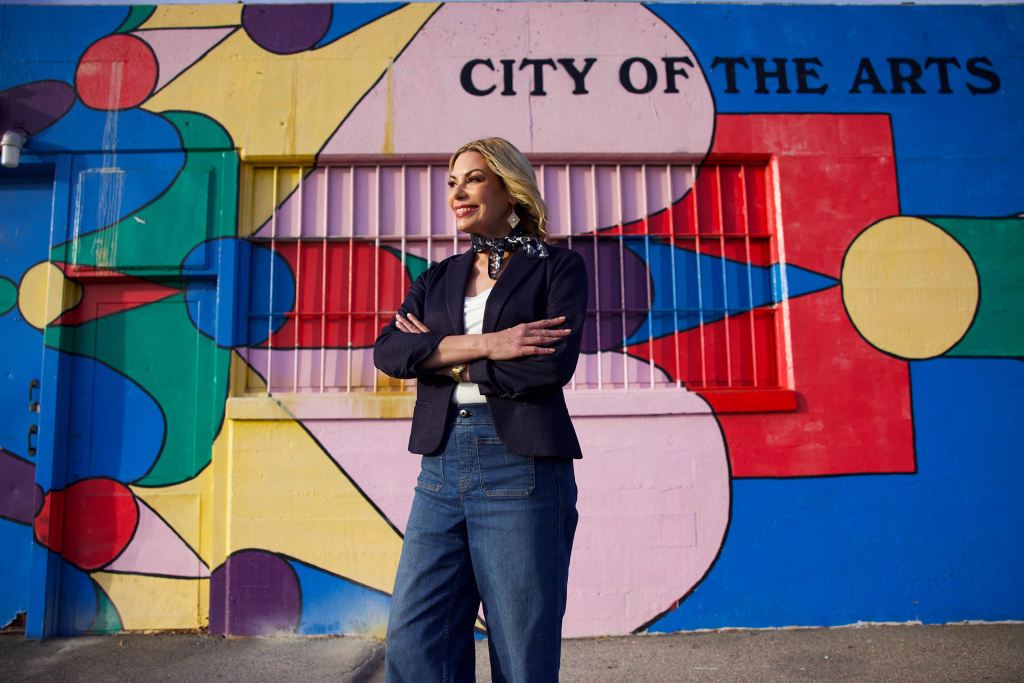
And it comes back down to transparency. Earlier this year, our City Council looked at a potential ethics policy, or, you know, governance issue, and for many reasons it was decided not to move forward at that time. And I understand that, but we have a new City Council. And I really want to make that a cornerstone the first [one] hundred days and we bring it up and kind of compel my colleagues to sign an ethics pledge, even if it’s nothing that the city puts into city governance, that we are transparent and accountable. That will go a long way, I believe, in setting the tone for this next Council and hopefully make constituents believe they might be wanting a little bit differently.
Two is, going back to, we need to get residents and business owners involved in processes far earlier on, and we also need to shape the public commenting period differently. Actually ask residents, “what would it take to get you involved? How can we do this?” And it might be, we’re breaking up and we’re literally doing neighborhood meetings instead of four official meetings at the Norma Herzog [Community] Center. But making it far more resident-driven versus city-staff-driven I think will also help to go a long way of having this trust.
And then third is: better cooperation with public-private and nonprofit partnerships. We all have a vested interest in this. And we also kind of, you know, all have to take responsibility for the survey results. If residents aren’t getting what they want from City Council, boot us. I’m serious. Like all of this doesn’t have to be happening. There’s no one, no mandate. We can change things and we might not be able to change things on a federal level, but we absolutely can change how everything works locally. And I think people are forgetting how much power that they have. And the more you feel power and self-agency, the more you’re willing to say, “yeah, that’s not really working, but I still trust it because I know we can get to the right decision.”
Jenn Tanaka
I wanted to circle back to when you’re talking about a desire for greater transparency. I wonder if you could elaborate on what you thought that the City Council needed to be more transparent about?
Cara Stewart
Well, let me give you an example. I know it’s just top of mind with FDC right now. You know, you were there, the chambers [were] filled, I think the overflow room even had [participants], and how many people there said: “I can’t believe you’re making this decision. I’ve never even heard about it until tonight.” That’s an issue to me of, when they think, “I don’t trust the government,” it’s because they didn’t feel like they were part of the process. That’s a transparency issue there.
A lot of times is also just demystifying and explaining what happens. You know, earlier this year when the lawsuit was filed like, from the state, against our housing element and zoning, the city never really talked about what that meant. And I, you know, of course, [there were] a lot of things that couldn’t be said. But to really not address it in a formidable way looked like there was a cover up.
You know, I come from a background of if you’re not talking about something, you’re covering it up. And it’s okay to say, “we can’t talk about this, and these are the reasons why,” but that breeds trust and invites questions, and invites participation in that. So the transparency or the ethics policy would be on that kind of, that macro-level of how we’re disclosing things.
On a personal level for individual Council members, it also means being above board with integrity. Are our business interests in conflict with the city? And yes, certain times you are compelled to remove yourself or recuse yourself, but right now in our city governance, there isn’t a real clear-cut decision on, if my business, my family, another group I’m connecting with would profit from this or be impacted from this directly, do I have to recuse myself?
And again, there’s self-dealing if my own company was going to get a contract, but there’s nothing beyond that. And I really want to see that. I would love to see a hard-and-fast policy that Council members are not able to profit from city decisions. A blind trust? Like, I don’t know how far we go with it. It’s going to take minds that are more schooled in this, but I absolutely know we have to do this.
Jenn Tanaka
And maybe that does – or doesn’t – segue into the next question, which is: you know, let’s imagine that, you know, you’re successful in November and you have the next four years ahead of you because the term is four years for the City Council. What, looking forward into those four years, do you think will be the most significant challenge that the city is going to face?
Cara Stewart
Our housing. It’s absolutely the balance of the affordable housing and when the term “affordable housing” now is quite laughable. If someone said, even fifteen years ago, that a person consistently making more than $100,000 a year couldn’t afford to buy a house – you know, I think most of our, you know, certainly anyone over the age of 40 thinks affordable housing, it’s people who have been down-and-out, and we’re trying to house people who have no opportunity to make mortgages. That’s not the case. You’re talking about people who are our teachers who maybe are returning college students, you’re talking about seniors who are being forced out.
If we don’t address this and have a housing policy and really look at the city holistically, of where we can improve ADUs, where we can have maybe have tiny houses, where we can have a mix of housing units without changing the character of what makes Costa Mesa so cool, we’re going to be in so much hurt. That’s going to impact how families are raised, how our small businesses do, whether or not tourism comes here. And it’s really the core of life is safe, affordable housing.
Jenn Tanaka
So just to follow up on that, what are the levers that the City Council can pull then with respect to affordable housing? Or maybe I should say, what are the levers you’d like to see them pull in the next four or four years to address housing affordability?
Cara Stewart
One is – and this is going to go take a step back to the work that has been done – but again, clean slate for our zoning and clean slate for our housing element and policy and reimagining looking at the entire city. There are areas that absolutely can be rezoned and redeveloped. Some of our commercial corridors worked in the past because that was the nature of industry. Well, industry has changed, businesses have changed. Now even our car dealerships that produce so much of tax-based revenue – because people are driving less and cars are different and electric cars and so many other things – those have reduced. So what could be the future of the industry here, business here, and housing here? And it’s really going to take a strong City Council that can look at a vision, work then with staff, work with constituents to figure out what that is, but it’s going to take a clean slate to do this.
Jenn Tanaka
Got it. And again, let’s pretend that you are successful in November and you’ve actually served out your term, and now you’re at the end of your first term. What do you want to look back on and say, what do you want people to say, I guess, about what changed because you were the person representing District 3?
Cara Stewart
I thought a lot about that because, as I’ve said a couple of times, how I do my work and how I just approach life is: I may not know how I’m actually going to get there, but I always have a really clear way to articulate what my goal is. And my goal is: if every member of District 3 said, “I felt invested and I felt like I was heard and part of this process,” I would feel like I was accomplishing what I set out to do.
Jenn Tanaka
Right, and we’re actually getting towards the end here.
Cara Stewart
May I say one more thing?
Jenn Tanaka
Of course, please.
Cara Stewart
Particularly, you know, citywide, but particularly my district is what, 46% renters? And we’ve had this study that people talked about, we’ve probably known about it, the rent burden or housing burden that people feel. Traditionally financial planning was what you spent on rent or mortgage should be less than 30% of your income. But 50% of our constituents aren’t able to do that. And that is fundamental. So I want to make sure that, as we’re talking about this process of engaging everyone, we’re not only talking about homeowners. We’re also talking about our renters. What is their pathway to affordable, to them, to be able to buy their first house and to stay in Costa Mesa? That is incredibly important.
But also looking at renter protection here. I’m not talking about rent control. What I’m talking about is: how do we get them – working maybe with more property managers, landlords, apartment housing leaders – so that they feel like they’re also part of this process? That will also get us to solving that housing issue faster.
Jenn Tanaka
So I just wanted to end with some rapid-fire questions.
Cara Stewart
Oh yeah, the fun ones?
Jenn Tanaka
Yes, I think these are fun. So my first question is, can you describe for us a place in the city that maybe brings you peace or happiness?
Cara Stewart
It’s my little Tewinkle Park. I cannot wait until all the lakes and the water features are back there and all the waterfowl come back. I love walking there with the dog. I love sitting and staring and it’s you know – Fairview Park of course has such a special place, but – to me, just being able to walk over to Tewinkle sit and stare at the water for 10 minutes rejuvenates. And I think a lot of people think that, “I have to have a purpose to go to a park.” And you just go there and sit for ten minutes. And it’s like you left the hustle and bustle and you’re recharged again.
Jenn Tanaka
That sounds like a good purpose to me. Yeah. and then reflecting on your time living here, I was wondering if there was a business or maybe an institution or a tradition that’s no longer with us here in the city that you really miss.
Cara Stewart
Yeah, well, this is more growing up or visiting – the Kona Lanes was really fun. Probably shouldn’t admit this, but there was this underage drink – Zima – there. That just goes to show, like, how long [ago] it was. [Laughter]. But it was just kind of fun. I want to make sure that, as we’re maturing as a city and we’re going to being a little more sophisticated in some areas, that we don’t give up that quirkiness that made Costa Mesa so cool.
Jenn Tanaka
Awesome. And lastly, what do you think is the best kept secret in Costa Mesa that you’re willing to share?
Cara Stewart
[Sighing] There’s so many.
It’s not really a best kept secret because so many people do talk about our dining. But I really encourage people to just the little one-off, weird places and to get to know their local neighborhood [restaurants]. It’s not my district, but the great row of breweries are so much fun. And what I learned this past summer is now many of them are starting to have pop-up food vendors. So you get to really truly support a micro-business. Like this one that was at Salty Bear [Brewing] was this mom-and-daughter who started a taco stand, basically, and they’re just mobile, they’ll pop up, but now they’re starting there. So you’re actually changing this family’s life by buying there. Some of the best tacos I ever had. You’re patronizing the brewery as well. And it’s all totally walkable. So those are kind of the really fun secrets that I really love. That’s kind of on a community level.
And then a little best kept secret of going to City Council meetings is sit in the back row, because the electrical outlets are behind you. So you can still plug-in and then you get this bird’s eye view of everything that’s happening.
Jenn Tanaka
Yes, as a frequent visitor of City Council, that is a secret I wish you had not shared with the audience [laughing]. But I love that one.
Cara Stewart
You can edit that one out!
Jenn Tanaka
No, it’s great. That’s a great answer. It is a great answer. It’s definitely the best seat in the house.
So, Cara Stewart, thank you so much for sitting down with me.
Cara Stewart
Thank you so much. This has really been fun too.

