
Want to listen to this interview? Check it out on the Goat Hill Rodeo Podcast.
*** Begin transcript ***
Jenn Tanaka
So today I am talking with Fisher Derderian, who is running to represent District 4 on the City Council.
So welcome, Fisher.
Fisher Derderian
Thank you so much, Jenn. Glad to be here.
Jenn Tanaka
Great. So let’s just dive right in. I’d love for you to start by telling us who you are, why you want to run, and what in your life or work in the city led you to run for City Council.
Fisher Derderian
Yeah, absolutely. So as you said, my name is Fisher Derderian. I’m originally not from Costa Mesa, I’ll admit it on the upfront. I think many of us are, though I know there’s a number of great, you know, lifelong locals. But I grew up in the central valley of California, so near Fresno, for anyone who’s familiar, and then went to school in New York City.
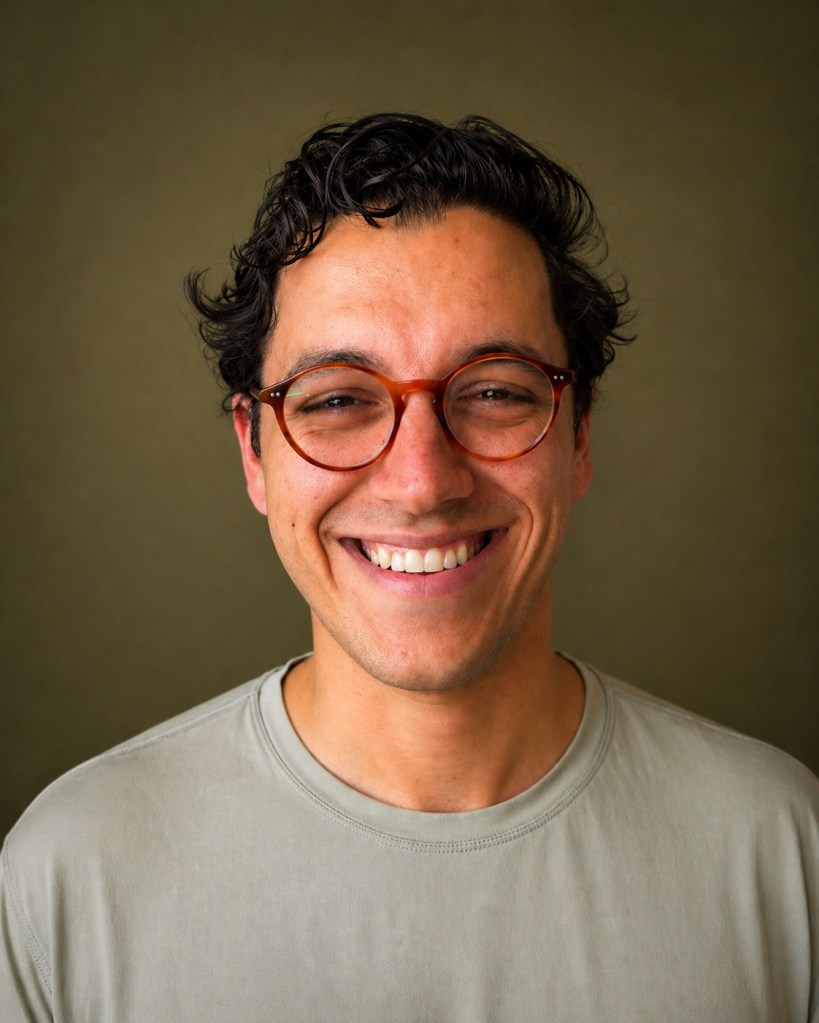
And after living there for about seven years and the birth of our first child, my wife and I decided to move back to Orange County and found ourselves in lovely, not so little perhaps, Costa Mesa. And [we] really came to love it and lived first on the Eastside and then moved to the Westside from an apartment to a house where we rent. And [we] ended up in District 4 by chance and have come to really appreciate and love the neighborhood and find just many beautiful things about it.
[Photo Credit: Fisher Derderian for District 4 Campaign]
And so for work, I guess to give that background, the way I like to put it is I help make things beautiful. And that doesn’t mean I’m an interior designer, but I work on beauty in various senses. And so I actually founded an international foundation based on the work of a philosopher whose primary effort was around the philosophy of beauty and art. So I get to work with a lot of artists, architects, even politicians and business people in the states and around the world on this effort. And that’s just led to some incredible opportunities where I’ve gotten to speak into policy at various levels. I’ve gotten to host conferences with world-renowned artists and philosophers and so forth.
And you know, part of that philosophy too is trying to figure out, you know, what are these cultures, what are these traditions that actually make up a people and a place. And the more I got international, the more I said, well, what does it actually mean if I care for roots everywhere else? What are the roots here in Costa Mesa where I live and where I have my family? What do those look like? And so for my wife and I both, you know, we really care about our roots and and really trying to plug in and know the neighborhood, know the community and actually give something back to it, not just take and take and say, well, that’s that, right?
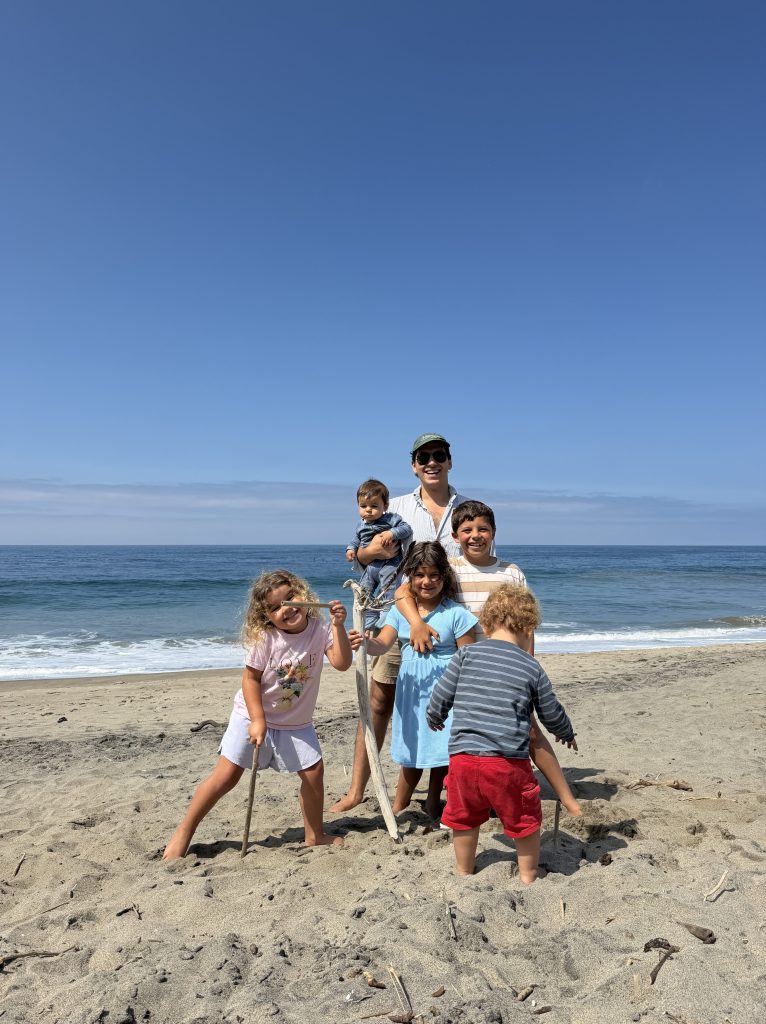
I have five kids. And you know, once you have one or more, you start to realize how important your local streets are, how important the local parks and libraries are and what that access means. And so getting to experience that and go through [it], especially with that kind of art and philosophy background and various things, I decided to apply and join the Arts Commission.
And so I joined it, not exactly when it was started – I think this was the end of 2020, but just in 2021 – because my third child had been born the week before the application was due. And so, you know, I got to just experience the Arts Commission as it was finding its legs, too. It’s a new body, you know, it was only established in 2020.
And as I went through that, I started to realize, you know, the way in which the city works, you know, how these various decisions are made and what they affect, and the various processes that go into that at the end of the day. And so [me] having a lot of questions throughout that and starting to push and poke, poke the bear, as it were, if if you’ll allow me to use that metaphor, I started to discover that, you know, there’s a lot of ways in which the decisions that even we’re making at [Arts] Commission go to the Council and go back to the electorate and trying to understand, you know, what the actual constituents want in the city, what the residents want, what the business owners want and so forth, and how those decisions are made are really important.
And so, you know, like I said, by getting to walk around, especially in the district and experiencing that, I just started saying, well, there’s more that can be done here. And I’d like to, you know, try my hand at that and really try and help out my district and my community and see if I can use my skills and my background to the benefit of the city, really.
Jenn Tanaka
Well, we’re going to start with some questions that are focused specifically on District 4, which you are seeking to represent on the City Council. I’m going to start here with throwing you right in with a controversial issue, which is that in 2023 thereabout, the city completed its West 19th Street rehabilitation project.
That project added bicycle lanes, it added a traffic light at Wilson Street, and it reconfigured traffic so that two lanes merge into one prior to Placentia [Avenue] as you travel westbound. And these changes created a couple of different situations. First, it caused some backlash on social media and in public comment at City Hall. People were concerned about traffic backups and other problems that they were having navigating the street after it had completed its rehabilitation.
And then the Active Transportation Committee, which is another committee of the city council, reported last year that crashes, particularly crashes involving bicyclists and pedestrians, were down since the rehabilitation project was completed.
So what I wanted to ask you here was, I wanted you to reflect on this project. Having been a resident of District 4 – I assume you have some familiarity with 19th Street – reflect on the city’s experience here and how, as a city council person, if you were elected, you would navigate between city data and staff concerns, on the one hand, and vocal members of the public making their positions known, on the other hand.
Fisher Derderian
Yeah, that’s a great question. So, it’s tricky. Obviously, As you said, I live right next to it and have experienced it. I’ve ridden my bike and driven down, you know, 19th [Street] and and had both experiences, as well as walk down it. And so it’s an interesting thing just to see. And even as I’ve gotten out and done the campaign, you know, talking to residents and seeing what really are a wide mix of emotions and feelings about it. Some people who love having the greater bike infrastructure, but a lot of frustration with way in which it was done and how it was gone about in implementing it.
And so I think this is where you kind of get into the tricky nature of local government, right? You know, we can’t just take one area and silo it off. I think we have to understand both both aspects, or the multiple and various aspects of that. And so when you talk about things like reducing crashes and making it safer for pedestrians and bikers – I think that’s a great reality that we want to recognize and perhaps build upon.
But at the same time, we have to figure out, you know, if there is a vocal response from our residents and from the population that actually deal with it, how to make it better for them or at least better communicate with them, that this is a good thing. If it is, you know, if we are saying it’s a good thing, right?
And so I think that’s really the job of Council is obviously taking that data and the technical expertise that staff and even some of the commissions or committees are making and really trying to wrestle with that and understand – [does] this actually move us towards our goal? Is our goal safety and [to] reduce accidents or is it, you know, greater ease of mobility? You know, what are these sorts of things and what are the trade-offs that we’re willing to make, both as a council and as a community or as a neighborhood or as a city? And then figure out what you do in the first place, right?
So we implemented it. Now we have these. And now we have a big response. And I think, you know, we do have to consider how to improve those streets, because ultimately West 19th is one of those areas – and I’ve said this elsewhere, and I think I just submitted a questionnaire for [the Costa Mesa Alliance for Better Streets, or] CMABS where I discussed this a little bit at length – how I’d love to see, you know, 19th Street revitalized, because it certainly is kind of this, you know, downtown that never quite fully became one, I think, in a real sense.
But I would like to take it maybe even block-by-block and just consider, you know, what does this look like? I find when I ride my bike, and I’ve ridden it across town from the Westside to the Eastside before, that stretch from you know, Meyer Place to, you know, or in front of the [Department of Motor Vehicles, or] DMV to Newport Boulevard, is actually the really dicey spot. And once you get that far over past Meyer, right, it actually slows down quite a bit. Even if there’s a lot of traffic and I know around Placentia [Avenue] for whatever reason, those two intersections along Placentia at 19th and Victoria [Street] are some of the worst and some of the craziest in the city.
So I think we just need to be a little bit more thoughtful and actually respond to the concerns because there are real concerns and there’s a lot of frustration. And ultimately, you know, it comes down to the people who have to live with these decisions, whether or not they’re happy with them, versus us saying, you know, either at City Hall or, you know, residents across town or whatever, saying, well, “we looked at the basic data and it and this is a good picture,” right?
Because I think both things can be true. It’s not just, you know, you either have data or you have, you know, your public response. We have to be able to listen to the public response to the data and say, what do we actually value and what’s our vision for that? And if it is making life more frustrating for the residents that actually experience it, we need to make that better for them.
Jenn Tanaka
So if the city were to propose a different rehabilitation project on another street in District 4, based on the lessons learned perhaps from this experience, what would be your expectations about notice, outreach, getting public input with respect to the City Council and what would be a City Council member’s role in that?
Fisher Derderian
Yeah. Well, I mean, especially if it’s in your district, right? I think you should be involved as much as possible. You should actually be listening to the public output. And I’m not saying that current Council members don’t do that. But I think as we’ve experienced with many of the issues going on in the city, whenever you have public input and feedback sessions, you have poster boards up and you put a sticky note on and everyone [at the city] says, “thank you very much for coming. We’re glad that you did this.” And then nothing comes from that.
And we see that right now with [the Fairview Developmental Center, or] FDC – not to get distracted with another issue – but the first time the communities felt really heard is a few weeks ago when the Mayor had an actual town hall conversation [on FDC]. And the years of input going into that didn’t really affect what’s being advanced at this stage.
So I think you just have to actually listen and act on those things, and try and, you know, at the very least, communicate effectively what it is you’re trying to do and why we’re trying to do this. So if we ultimately say we do want to slow traffic down – and that’s not necessarily a bad thing, and I know some people will be frustrated with that statement, but having kids and walking along certain streets, you recognize it’s not a bad thing to at least have slightly slower traffic, people be able to recognize that stops are good and those sorts of things, so that, you know, small children who are two feet high don’t get hurt – we’re going to say that and make that kind of a value, then we should communicate effectively why that matters and how these specific features, whether it’s a roundabout or the bike lanes or the bollards or whatever it might be, are actually helping adjust that.
And if it’s ultimately decided that that’s not a feature that the community wants, or if there’s a better way to do it that takes the community’s preferences into account, then perhaps we might be able to do it.
And I’m sorry this is very vague, but it’s in some sense a hypothetical, right? Just trying to figure out, like, how do you actually address these situations and go about doing it? And I think it really means you know, comes down to like, let’s actually listen to what the community has to say when we make these things.
Because for instance, and I might get some flack for this too – I loved the roundabouts on Meyer [Place]. Because the issue is, if you’re ever turning off one of those streets, you turn off those streets and there’s always traffic and sometimes it goes way too fast because you have a lot of out-of-town people coming to the DMV right there on 19th [Street]. or you have Rhea Elementary [School] and then Pomona Elementary [School] a block away, right? And Page Academy, which is another private school right there.
[Photo Credit: Fisher Derderian for District 4 Campaign]
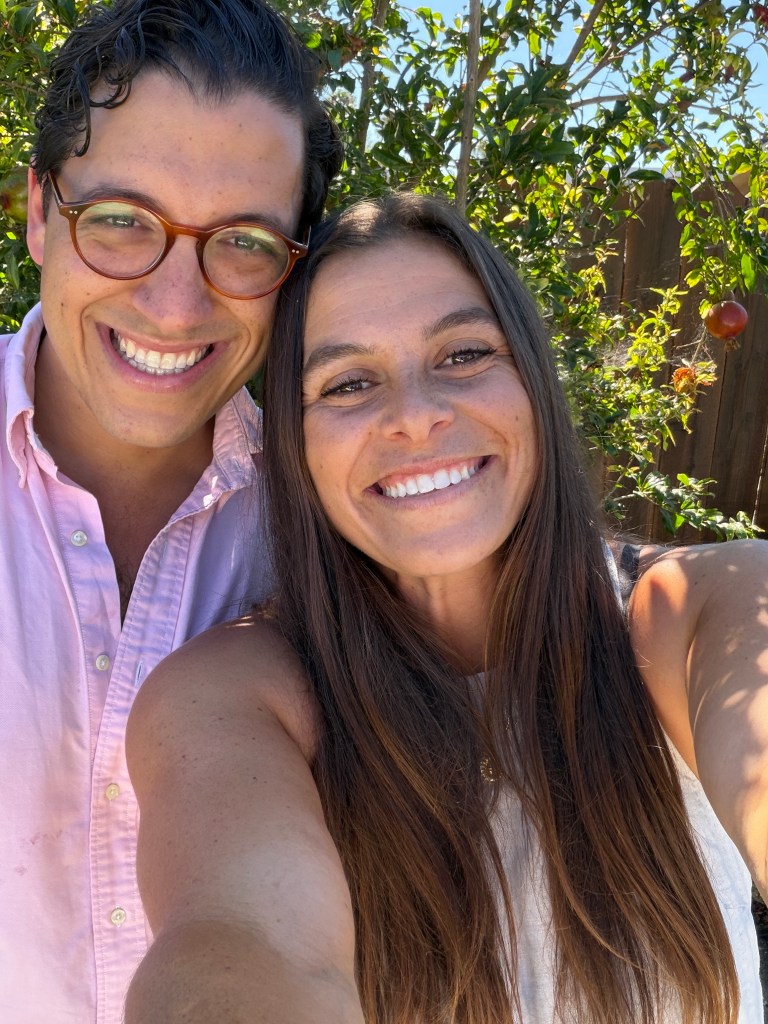
It’s a little strange that sometimes you get people zooming through so fast on, actually, a residential street. It’s not 19th [Street], it’s not Newport [Boulevard] or Harbor [Boulevard], right? So there are some of those things [like the roundabouts] where we’d be open to it. But, I guess ultimately if the large majority of residents who live there and actually experience that traffic on the day-to-day say, “we don’t want that,” well, you have a clear answer, right? And I don’t think any street is or rather, every street is too important to be above ideological approaches.
Jenn Tanaka
And then another question I wanted to ask you was about the significant rezoning efforts that the city has been undertaking in the last year or so. So as you may be aware, Costa Mesa has a Housing Element process where it is trying to meet certain requirements that the state has put on it to zone for more housing. And part of that effort has been
An effort called Neighborhoods Where We All Belong, which is a rezoning effort running alongside the housing element process to rezone the commercial corridors of the city. And one of those corridors is Placenta Avenue, which runs down the west side of District 4. And since 2006 or so, development along that corridor has been controlled by the Mesa West Bluffs Urban Plan, which I believe envisioned kind of a mix of industrial, retail businesses, urban lofts, and live work condominiums
About 20 years later now from there, we are now looking at this Neighborhoods Where We All Belong effort, which will significantly rezone that corridor and add significant housing opportunities to that area. So what I wanted to hear from you was, when shifting from one vision, one urban plan, such as the one along Placentia, to now another, how do you think as a potential City Council member about balancing various priorities in an area like that where you have housing, you have interests of existing residents, you have, you know, commercial vitality. How do you think about balancing that when you’re changing the plans?
Fisher Derderian
Yeah, I mean, I think you have to start off with the high-level view rather than the specifics. And what I mean by that is you want to pull all these factors into a holistic view of the community and of the neighborhood, the district, the city, whatever it might be. And I think so often, especially with the various pressures we’re receiving right now in this moment from the state and from the various agencies at the state level and other interests, both around town and outside of town, right, it becomes easy to say, well, “there’s this one specific issue and we just have to get this one specific issue right.”
And if, for instance, we approve the 11,760 units [required by RHNA] – then [we might say], “we’re going to be okay. We can move on to the next important issue.” And there’s obviously truth to that. We don’t want to get dragged into, say, a long lawsuit with the state of California and face all those various other impacts – which we, in fact, are already facing, which is another horrendous situation – but to put that aside, you know, the if the focus becomes so narrow that we’re only focusing on numbers, we’re going to shoot ourselves in the foot for the next 10 or 20 years, because we’ve just jam-packed density for the sake of density because someone told us we needed to, and there’s this threat of other various, you know, issues coming our way.
And so, while I recognize that, you know, a large majority of people do want more housing, and we do actually legally have to respond to this in one way or another, we also should be stepping back. And we’re far too late in the process now to perhaps do this, but – that will, I think, [be] the commission for the next Council and Councils after: [to] step back and say, “okay, how does this actually make sense? Is this a coherent picture of our city? Is this a coherent picture of this community and even of the street?”
And so when you look at things like the 34, I want to say, work-live units that was developed kind of more south along Placentia, you get this interesting picture where – yeah, I mean, we do want more housing, but we’re plopping 34, you know, units or houses in the middle of an industrial park. And I think the question becomes like, are we really building well for these people? And are we building well for the future of a possible neighborhood?
And if we’re not thinking about that wisely, I think we’re going to make a lot of dumb decisions that, you know, 20 years from now, you’re going to look back and say, “Why is this like that? And [is] this like that?” There’s just going to be a lot of incoherence in neighborhoods. And and not that, you know, even historically developed neighborhoods are always coherent to a sense, but there is at least some sort of, I think, logic that flows through, some sort of legibility that this is a place that people try to create for certain reasons.
And we actually have, you know, the foresight and hindsight, perhaps too, of looking at the various areas that we’ve already developed in Costa Mesa and recognizing there’s not a ton more to I think develop beyond what’s already happened, right? There’ll be more infill possibilities in FDC and other sorts of things.
But just trying to think, I think, very strategically about that wider picture and then zoning in on the specifics and saying, “okay, now we do have this. Maybe, maybe the pressure is Housing Element update. We kind of have this vision of what we want these areas to be and you know what Westside or District 4 or Placentia [Avenue] is going to look far different from, you know, Eastside or Mesa Del Mar or, you know, Mesa Verde or anywhere else, right? So these are all going to have various characteristics and qualities of a neighborhood. Let’s try and actually build things out because then that becomes a place where people want to live.
And I think that makes it more valuable and more desirable. When you just kind of shove in housing for the sake of housing or the sake of density, you just get really strange developments, you get uncomfortable positions. and it creates a lot of difficulties that I think we’ll be frustrated by in the future. And then in another 20 years time, they’ll say, “what the heck were they thinking?”, in 2026 or [2028], or you know, whenever it is that these decisions are made.
Jenn Tanaka
Do you think that looking forward, the city needs to do more to better understand these areas than what they’ve done through the program that they’ve gone through this year?
Fisher Derderian
Yeah, I mean, I think there’s more that could be done. It’s not to say that any additional effort will make it perfect per se, but it could be improved upon. And what’s strange though – you look back, and there’s the West 19th plan. I don’t know if you’ve seen this. And I was thinking, gosh, I do love a good bit of architecture. That is one of the areas that I’ve kind of spent some time working on and thinking about. And so I was thinking these are just going to be like, horrible buildings. I think this from maybe a decade ago or so, right? They’re going to have proposed a bunch of dumb things.
And I looked at it and the architecture’s actually fine and the plans were actually really decent. But then you look at 19th and the only thing that’s really happened is that we put that little fancy sign when you pass Harbor [Boulevard]. There’s that sign that says “West 19th”. That’s supposed to signify that it’s something special. You know, but there’s not much else that’s actually occurred because of that plan. Or at least not that I can tell.
So here’s things there. And I think you know we can improve it and we can you know, do more, but we can also use what’s already been done in a lot of ways and actually just be wise about it, rather than having to respond, I think, in all these rush kind of emergency situations where, yeah, how did we get five years into a Housing Element plan and never have anything certified? Now we’re being threatened with lawsuits. We’ve not received millions of dollars and grants that we’re supposed to be receiving for various projects that we’ve taken specifically because the promise was we’d be receiving grants for them, right? And various other issues like that.
So I think more could be done. And I think if we want to really be sensitive to these things or really thoughtful and have a fantastic plan going forward, we could really consider what are the various qualities and characteristics of these different neighborhoods and these regions that make them distinctively “them,” right? And then how do you improve that? How do you better kind of furnish that or give them features that make that easier and better because the needs of Mesa Verde are not going to the needs of, you know, Placentia [Avenue]. And we just have to be thoughtful and creative how we address that.
Jenn Tanaka
Great, just keying off of that comment about distinctiveness. Another question I had when I was looking at District 4 is it reminded me of how the districts came to be in the first place. If you recall back in 2018, the city had in that election moved from at-large elections to district-based elections. And part of the goal of this move was to ensure that neighborhood-level concerns were better represented at the City Council level.
And District 4, as it happens, with the way it was drawn, is a fairly statistically distinct district. It has some of the highest concentrations of people who rent. It has a significant number of people in the city who are multilingual. And it has pockets that have higher poverty rates. It also has some of the more vibrant streets, you know, in the neighborhood or in the city. So I was just reflecting on those reforms and wondering what you thought about how District 4 has evolved over the past few years. Do you think that investment of the city’s time and effort is now appropriately distributed across neighborhoods? Do you think that the move to district level district voting has made it better for District 4?
Fisher Derderian
Yeah, I mean, I think yes. The short answer will be yes. I think there has been improvement and then I’ll give you my long answer.
Jenn Tanaka
It’s a very high level question.
Fisher Derderian
No, absolutely. It’s a great question. You know, certainly the at-large election system would create situations where you’d have probably large areas of the city that wouldn’t be necessarily represented with a constituent from that area, right? So in that sense I think District 4 or, well, the district system at large, I’m actually fine with that. I don’t have an issue with geographical representation. I think that’s a great way to create accountability for your government at any level. That’s certainly why that’s been the case everywhere else, you know, in our system of government. That’s a great thing.
And that’s actually one of the most distinctive and important aspects of a specifically republican or democrat – I mean, in the very, you know, theoretical terms, not talking partisan politics, right? — because we are a democratic republic within the United States. But having that sort of representation and having it be specifically accountable is one of the greatest goods I think we can offer for a representative government.
And so in that sense, the more you can actually tie accountability to a specific place and specific peoples, the better it is. This is, [and] maybe I shouldn’t let my philosopher come up. Nut I think that that’s like a deep truth in government and in how you actually organize people, right?
So with that in mind, I think when you have the geographical distribution of districts, that’s great.
Now, do the districts always make sense? Is there a reason why certain sides of the street belong with one district [rather] than another? Not always. But I get, you know, you also do have your different voting precincts and it kind of probably maps upon that and however you figure it out.
But even the shape of District 4 is very odd to me, and I love it. I think it’s a great area, but you have this big square and like an upside-down “L”. And you can tell that the way in which it was created was to primarily hold a lot of the apartment stock and especially these older apartment stocks. Some of the greatest density in the city is within District 4, right?
So I’m saying all this just to kind of set [out] various thoughts on the larger question of: has it improved? And I think it has. I think you do get greater concern and care about what’s actually going on in your district and you have that accountability with our council member, Council Member Manuel Chavez, who’s done a great job with that and trying to be involved in the community.
And the difficulty then becomes well, you become so focused, you know, in this race, for instance, I’m so focused on what’s happening, in District 4, that the concerns of the wider city, which I will still be in charge of as a sitting council member, just aren’t a part of the conversation unless it’s very large ideas like FDC or other hot topics, you know, perhaps at the moment, but I’m sure there’ll be many others and more to come, that that get overlooked to some extent outside of those very specific hot topics.
[Photo Credit: Fisher Derderian for District 4 Campaign]
And so that’s just the difficulty, too, of having that sort of representative government. How do you both represent the specifics but then also make decisions for the whole?
Forgive me, I’m giving you a very theoretical kind of reflection on it all. But I think it has been good and I think it will continue to be good. And we can only improve from here and be more responsive to the electorate themselves, the constituents that are, you know, in these places that we are being charged to represent on Council.
Jenn Tanaka
It was a very high-level philosophical question. so switching gears totally though, back maybe into something you’re more familiar with as a member of the Arts Commission, as someone who has a career in the arts. This is just completely hypothetical. If someone were to hand you a hundred thousand dollars for an art initiative in District 4, where does it go and what does it do?
Fisher Derderian
Hmm. Well, you, Jenn, will know, having been one of the few, if only people to follow the business of the Arts Commission, that I have proposed things. I’ve tried to do things, I’ve tried to make certain projects happen that have been, unfortunately, to put it as simply as possible, lost in communication, I think, to the various decision makers.
But one thing I’m still very passionate about and would love to see is, you know, I don’t think it has to be just art. And what I mean by this is we can do artistic projects that actually benefit the whole of the community and incentivize activity and engagement from all sorts of different people. right?
So one idea I’d love to see is the city, or at least some adjacent partner, you know, kind of leading – I think you made the suggestion, which is really good. And I’ve seen other cities do it – where you have some sort of emblematic animal or statue figure that could be created and various businesses could acquire and design themselves and kind of make it a reflection of their local business or that local street or neighborhood. And I’m sure many businesses in the city would participate. I think you was it you that suggested this in the blog –
Jenn Tanaka
The [painted] goats. Yes! I did suggest this.
Fisher Derderian
I think it’s a fantastic idea. I really love it. I thought that was fun because I think public art, when it’s done well, should be playful, [it] should be representative of the history and character of the culture and of the people there. And it should bring alive the city and make it more inviting and a place of engagement and conversation and really home for the people that live on the streets, walk on the streets, work on the streets, right? So I love the idea of having, say, goat statues that businesses get and design and just make it a fun yet quirkyish feature of Costa Mesa, an artistic feature.
But the project that I proposed last year, or guess a year-and-half ago now, would would still love to see happen, which is doing some sort of like mural project where it’s not that we’re going and paying a bunch of artists or even a bunch of businesses through the city, or some, you know, adjacent organization, but doing something where businesses that had open blank walls, you know, beautiful canvases waiting to be filled, could apply and we could pay, you know, say $2,500 or $5,000 to an artist to actually create a mural for them.
And I think that would just be a wonderful way to activate businesses to, you know, help support artists, which is always a big issue in the arts world. How do you support them? How do they make a living wage? You know, so on. But then also to make our streets come alive and not, you know, so much sequester perhaps the public benefit to one specific area. If you were to say do a big statue or installation, you know, that can get kind of be located in [only] one spot, but to have a number of businesses across the district, even across the city, actually have art on their walls, actually make [the] city a little bit more vibrant and beautiful, and fun.
Jenn Tanaka
So now I am going to ask you to think about things a little more citywide. Yeah. and one thing I was reading this summer was there was a University of California at Irvine poll that was done with residents of Orange County. And they asked them various things about their views of different levels of government from the federal government down to the municipal government.
And one thing that jumped out at me was that in that poll, only four in ten of Orange County residents said that they trusted their local government. And so I wanted to see what you thought as a city council person or as a city council as a whole could do to improve public trust in local government?
Fisher Derderian
Yeah, no, that’s a great question. So I think there’s a number of ways to respond to this, but one would be: actually listen to the public, right?
And what I mean by that is, what I mentioned earlier with some of these public input sessions or feedback sessions where, you know, if you were to go to them and I’ve been to them, my wife’s been to them, you know, you quickly realize – it’s kind of a gimmick. And they’re not really looking for much outside of like, what is a sticky note going to convey about some specific and actually quite big issue that’s going to impact the future of the city?
So I think if there are more ways for people to engage in a larger setting or format and discuss these issues, like what Mayor [John] Stephens did recently for FDC, I think that would be actually a significant thing. And I know certain council members, like I believe Council Member [Jeff] Pettis, has started doing this where he sets up a booth in public places in his district and just talks to voters on a Saturday.
Now Saturdays are always difficult for people. I get that. But there are various ways in which I think we can do more to hear directly from the constituents in a formal capacity. What I mean is, like actually being, you know, representing the council and saying we want to hear what you have to say and we will actually take this into consideration.
Public comment is always tricky because you’re not really getting people inputting into it at the early stages of a decision. By the time it’s actually an agenda item on, you know, the Council’s agenda and there’s going to be likely some presentation and emotion coming. Council members, more or less, kind of have a general idea of where they’re going and [they] are just looking for some specific information. And then, you know, who actually shows up? That’s a big question too, right?
So there are a lot of those things that I think, you know, we could just be better at and trying to solicit input and feedback. But the larger issue that I’ve experienced both in the campaign and just in general is these various big issues that come up is, when you just talk to the average person who lives here, who works here, who’s trying to get by and ensure their kids are safe and comfortable and well fed and so forth, and if they’re not, you know, attending the meetings every two weeks and spending sometimes up to six hours sitting there and listening to these conversations, right – they don’t actually know what’s happening. And if they knew, they would care and they’d try and get involved or at least send in a comment.
But there just seems to be the difficulty – and you are one of the few people who are bold enough to do this, Jenn – of going through a seven-hundred page document and understanding what’s happening and what’s being proposed and then communicating that effectively in a way that you know people can say, “I actually don’t like that,” or “I really like that and I wish we had more of this,” right?
So don’t know if I have a specific measure at this moment to say, you know, this is what we can do to make it more just generally legible to people what’s happening. But we certainly should be doing some effort along that.
And if we do try and do outreach on those things to make sure they arrive before the moments that you know those decisions are being made,‘cause I know there have been certain sessions where you know a postcard was sent out by the city or by a consultant, and it didn’t arrive in people’s mailboxes until a day or two after the fact. So – how do you really plan to do that? Especially, you know, as a busy parent of five, how do I say: on Tuesday night I actually have to be free to go say something or do something, right? So I think those are just a couple of ways in which we can start to do more and listen better to the constituents and and really hear from them and make decisions with their, you know, their buy-in.
Jenn Tanaka
Do you view the role of a city council member to be in part playing that role as conduit between the public and what is being considered at the city level?
Fisher Derderian
Yeah. So this again gets into sort of the philosophy of representative government. I think there’s both levels to it where on one end you again are accountable to the people, you’re representing the people, you actually have to make those decisions. We have to recognize in a lot of these situations, staff is like in some sense its own company. They answer to their boss, which is the city manager, and the city manager answers to us, meaning the Council. So they are being given directives. They are being given, you know, “we want to do XYZ” and their goal is to act upon it.
And that’s not to say anything negative about them or to say they’re fools for doing it. You or I do the same thing in our jobs, right? We have a boss or if we are our own boss, we say, “well, this is what’s going to actually be the most effective for the future of my company. So we’re going to do this,” right?
So it’s not to put [City Staff] in any negative light, but simply to say, they’re not the ones, unless they’re doing specific community feedback sessions or going and asking people to solicit feedback from the public. That’s the job of the representative. And, you know, it’s in the representative’s, I guess, best judgment where they decide what that dividing line is. I was elected to use my skills and my knowledge and my experience to make good decisions. And I also want to make sure I’m representing the opinions and desires of my constituents.
[Photo Credit: Fisher Derderian for District 4 Campaign]
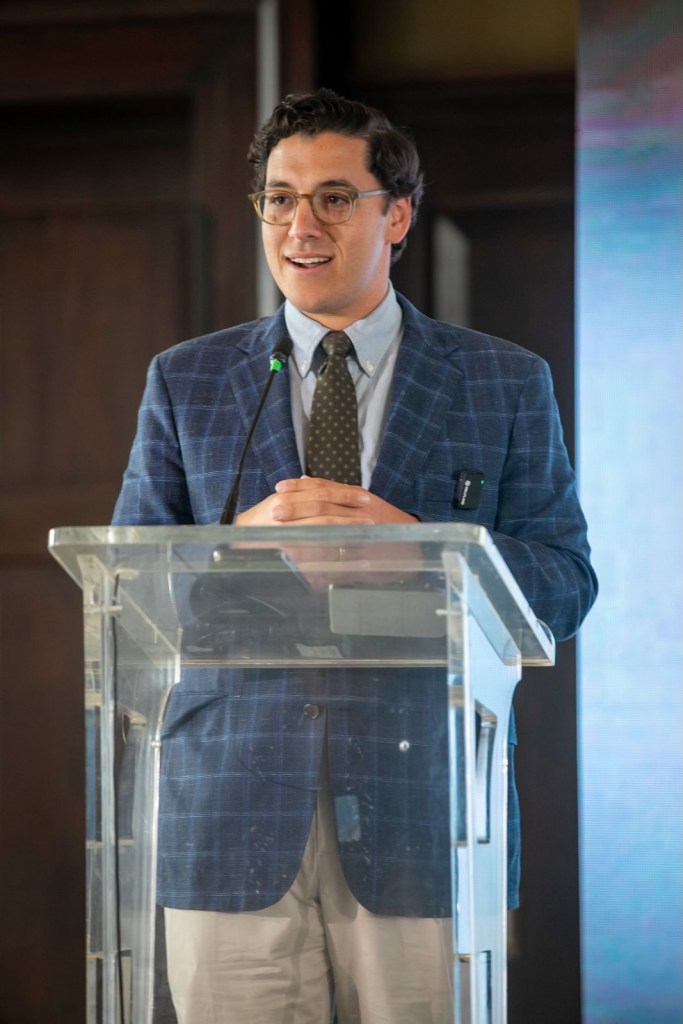
So I think, most clearly to the question, are the City Council members the ones, you know, supposed to represent these people and to hear from them as a sort of conduit? Yes. But there’s also that mix of, you know, using your decision-making powers and your knowledge, because unfortunately, like I said in the last question, there’s just a lot of complex issues that when you ask, you know, a mom at soccer practice or a dad who runs a small business or a consulting firm or whatever, you know, “what do you think of this?” They’re going to say, “Well, that’s stupid,” or “why do we do that?” Or, “that’s great.”
But they don’t understand that there’s been five years of history and there’s been letters back and forth between an agency and the city and there’s all this sort of legal constrictions, right? So I think that’s kind of the difficulty that a Council member finds himself in the place of. But certainly they have to listen, too.
Jenn Tanaka
And then, imagine again you are successful and you win a seat on the City Council representing district four, you’ll have a four year term ahead of you. What do you see in those next four years as a significant challenge facing the city?
Fisher Derderian
Yeah. I mean, I think it’s the unfortunate issues that we’re just constantly stuck talking about, which is growth is coming. Whether you want it or not, it’s going to come and we’re right now in, kind of, this emergency response situation and trying to deal with it. But we have to figure out how to deal with growth in a real way. And it can’t simply be, like I said earlier, you know, density for the sake of density. It can’t simply be, well, we need more housing units tomorrow. So let’s approve everything we can today to make up for that.
I think we have to find that real balance of allowing growth to happen and doing so in a way that keeps the integrity of a community in a neighborhood. So that these are real places people, you know, belong to, they want to live, that are distinct and are inviting and attractive to old residents and new residents.
Jenn Tanaka
I agree. I think that’s going to be a significant challenge. So another question I wanted to ask you was again, imagining that you are successful this November and then you serve out your four year term. So now we’re towards the end of your four-year term. What do you want people to say changed because you were representing District 4?
Fisher Derderian
Well I’d say as a whole that district four was cared for, you know, not to say it’s not cared for now, but I think it could just only continued to be improved. And the most tangible ways and really the most tangible decisions that a City Council makes have to do with the lived reality of people, meaning, you know, are the streets clean? Are they safe? Are they well appointed and cared for? What are the various housing decisions being made? What’s being allowed to be built? How are we designing them? How are we setting them up for success? And how are you creating these rules that govern activity in the city? Are they reliable? Are they, you know, things that can be expected and accounted for and various business processes that come, right?
And so just really trying to make the District even more safe and improvement more. I posted something recently about just even, you know, the curbs and the state of the curbs in a lot of these places. Now I understand there’s a lot of traffic that comes through, especially along Placentia. But we can always do a better job in those basic things. And when we get distracted with these high-level issues and we’re just not accounting or finding a good balance for the upkeep and growth of our parks, for, you know, the maintenance of our streets and various other aspects of that, then everything else kind of falters.
And that’s when you really have a disappointed public because at the end of the day, you know, these discussions of housing elements and FDC and everything else just becomes, you know, very theoretical and almost philosophical to the average person, but they know what their street looks like. They know if they can walk and feel safe, or if there’s going to be a bunch of homeless people or something like this in front of the library and how comfortable they feel taking a three-year-old to that situation. You know, those are real things that people encounter and experience and those are the things that I want to address the most.
Jenn Tanaka
Just to end then, I just had a handful of rapid-fire questions. So just you know, say what comes to mind in, you know, 30 seconds or so. So my first rapid fire question is what is a place in the city that brings you peace and happiness?
Fisher Derderian
I’m going to give what may be a very boring answer, but there’s nothing better than taking a walk with the family in the streets around our house, you know, at that twilight hour. When the sun’s setting, you know, you just get that peace. You get the beautiful golden rays or pink, purple, you know, orange rays kind of coming at the sunset. And the comfort of being in your home and loving the place and getting to spend it, you know, and experience it, spend time and experience it with the people that you care about most and love. Those are truly, I think, my most special moments.
Though there are obviously wonderful spots like in Fairview Park, once you kind of go I think it’s closer to the trailhead, but there’s that wonderful pasture. That’s always really fun to go and enjoy. Again, with my family. [Laughter] there’s a lot of those responses. But those are those kind of places of tranquility.
Jenn Tanaka
Amazing. And then if you can recall, is there a business – it could also be maybe a tradition or institution that’s no longer practiced – but a business that we used to have that you really miss?
Fisher Derderian
Yeah. You know, I say this out of both sides of my mouth perhaps, but La Cañada, which was in [District 4]. It was a fantastic Mexican restaurant kind of past Placentia [Avenue] in that shopping center next to Wayfarer. It’s now La Lomita, which is great. There’s nothing wrong with it. I actually really like it. It’s very tasty. But I got to know the owners, especially pre-pandemic, before they sold and [I was] sad to see them go because that was kind of a local institution. It still is. But I really liked La Cañada.
One of the traditions that I’ve heard of and would love to see come back is the parade through Costa Mesa. This is just the thing that every city should have. We should have parades and, you know, civic festive functions and we do have the fish fry by the Lions Club. But I’d love to see a parade of some sort and do whatever we can to make that possible.
Jenn Tanaka
And I think 19th Street would be a great place for a parade. And then lastly, what is the best kept secret about Costa Mesa that you’re willing to share with the audience?
Fisher Derderian
Best kept secret. Gosh. Got to be careful about this. Not to give a boring answer, but Costa Mesa really is the best kept secret ’cause we like to say we’re coastal without being on the coast. You know, we’re artistic. We’ve got this really beautiful diversity of neighborhoods and people and cultures, I think that comes together and I really love all those aspects of it.
Specifically, you know, one of the things I love to do, which – you can tell I have a big family – love to go to Shirley’s bagels and get the day-old bagels, you know, and enjoy those. Cut them up, you freeze them. But please don’t get the sesame. Those are my preference.
Jenn Tanaka
It’s okay. I have a dozen Shirley Bagels sitting in my freezer, so I understand. Well, Fisher, thank you so much for the time and sitting down with you.
Fisher Derderian
Thank you so much, Jenn. Appreciate it. Thank you.

