
This interview with Dr. Kelly Brown, candidate for Costa Mesa City Council District 5, took place on September 18, 2026, three days after the City Council’s September 15 meeting on the draft Fairview Developmental Center Specific Plan. Dr. Brown chairs the city’s Parks and Community Services Commission and has more than 25 years of experience in state, county, and city government. Her opponent is Steve Smith (read his interview here). The election is November 3, 2026.
Dr. Brown was interviewed by Jenn Tanaka for the Goat Hill Rodeo. Both candidates were asked the same questions in the same order, with topics shared 48 hours in advance and no prepared answers allowed. The transcript is close to verbatim, and the candidate reviewed it for accuracy only. To review the full rules, click here.
Published October 5, 2026.
Want to listen to this interview? Check it out on the Goat Hill Rodeo Podcast.
Table of Contents:
*** Begin Transcript ***
Introduction
Jenn Tanaka
So today I am here talking with Dr. Kelly Brown. And so welcome Kelly.
Kelly Brown
Thank you. Good to be here.
Jenn Tanaka
Great. Why don’t you start off by just telling us who you are, and what in your life or work has led you to run for District 5.
Kelly Brown
So I am Chair of the Parks and Community Services Commission for the City of Costa Mesa. It is a commission that I’ve been on for five years. [This is my] Second year as Chair, I was unanimously voted as Chair again.
I’m also a lifelong public servant. So I have spent over 25 years working in government. I’ve worked at the state level of California state government, I’ve worked at the county level, up in Alameda, I’ve worked at the city level, again up in Northern California, and I have done a variety of things in that professional life. So everything from managing big budgets, multi-million dollar program budgets, to co-directing a [University of California, or] UC-wide research institute, where I was supervising very high functioning or, you know, cross-disciplinary teams. I’ve weighed-in on public policy, I’ve even testified before the state legislature.
So being involved in public service is very much a part of who I am. But I’m also a wife and a mom. So my family and I moved down to Costa Mesa about 14 years ago.
And I guess I just thought I would share a little bit about my story – like, why am I here? So we moved down here about 14 years ago so that I could pursue what was supposed to be a temporary position based at [the University of California at Irvine, or] UCI. It was a UC-wide position, but based at UCI. I mean, I’m still here 14 years later, so not temporary.
[Photo Credit: Kelly Brown for District 5 Campaign]
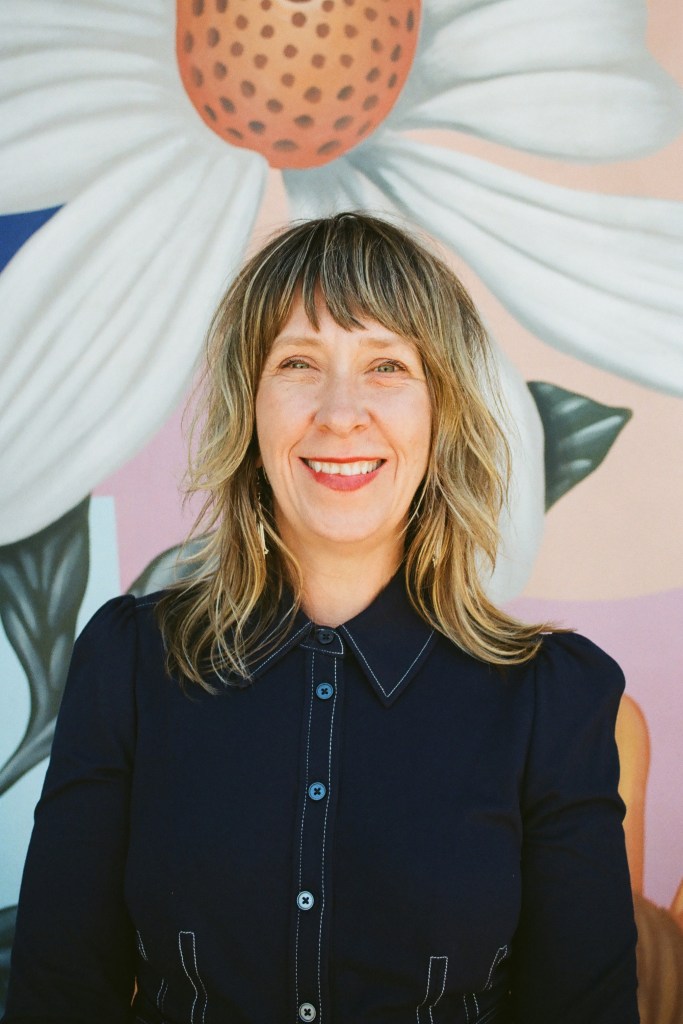
But my husband, Jeff, he was trained as a woodworker. So he has a background in furniture design and building. Down here, he’s a vintage car mechanic. So it’s different down here. So that’s what he’s doing. And then our daughter is in high school at [Costa] Mesa [High School]. And she’s just very involved in school stuff and student government, volleyball, indoor volleyball, beach volleyball. So we have a full life.
I would also share that I’m a renter here in Costa Mesa. So that’s been something that I’ve been drawing on as I think about running for office.
And so one of the reasons, I mean, I guess I’m going to answer the question in terms of like what prepares me. I have a lot of experience in government that I’m looking forward to drawing on. And so having worked at multiple levels of government, I am very familiar with how bureaucracies work and how they don’t work, and what’s required of somebody who wants to make a difference in government. A lot of the work that I did in government was around genuine on-the-ground public engagement. And so I learned very early on, when I was working at the State, what good models of public engagement look like and what bad models look like.
I’ve done things in workforce development, which is something that I think is particularly important right now as we’re thinking about all the young people who are graduating and hitting the job market, which is kind of a rough job market, too.
And then lastly, one of the things I’m really excited to bring is a background in communication. So I have research communications expertise, but also very public-facing communications expertise. And I think that that’s an opportunity for the city to grow. So those are some of the experiences that I’m going to draw on.
Jenn Tanaka
Got it. And what made you want to run?
Kelly Brown
Yeah, I mean, this wasn’t on my agenda, to be honest, because I really enjoyed my time in the Parks Commission. And I have a full life.
So I think for me, the there’s a couple of reasons why I’m running. I mean, one is just [that] I actually really care about people and I care about Costa Mesa. And so I think it’s an opportunity to make a difference and to try to represent people. But I actually think one of I think the primary reasons I’m running in addition to that – [and] we’ll get to topic of trust in government – is that I actually feel like now, more than ever, we need people who are in government who actually listen to people, who are willing to work across differences, who are willing to problem solve, who are creative thinkers and who have integrity, who are honest. And I think that’s something that I’m known for in my professional life. It’s certainly something I think I’ve built a reputation for in Costa Mesa on the Parks Commission in terms of really being open and trying to get everyone involved and trying to make a difference. So that’s why I’m running.
Public outreach and Neighborhoods Where We All Belong
Jenn Tanaka
So let’s, as you said, let’s dive into some of the issues. So the first one I wanted to ask you is I formulated these questions thinking about what might be top of mind in District 5 specifically. So in the last three or four years, the city of Costa Mesa has been very focused on zoning for housing opportunities.
In 2022, it passed Measure K, which amended Measure Y, which allowed the city council to have a freer hand to rezone our commercial corridors. And that has now led to this effort called Neighborhoods Where We All Belong (NWWAB), which is a significant rezoning effort along many of our corridors, but there are a lot of properties along Harbor Boulevard, Newport Boulevard, and West 17th Street that are now dedicated to increasing housing opportunities.
How do you think that the outreach process for this effort has gone?
Kelly Brown
Okay. So I have been involved in this. I went to a few of the meetings, so I’m going to draw upon that experience. And I want to start positively.
So I introduced myself by saying public engagement really matters to me. And I have been involved in this in terms of government public engagement. So that is something I bring to the table here.
But I did attend several of the sessions. And one of the things that I appreciated about them was that I felt like they were very interactive sessions, at least the one of them that I went to. And I appreciated that the city is engaging with people in that way. So [at this NWWAB outreach event] there are a lot of different activities to get people up, moving around, talking with various folks. And I do think that we’ve seen some growth over the years in terms of how the city is engaging in public engagement, how they are reaching out.
Also, one of the things that I appreciated about this process is that they moved around, right? So it wasn’t just a come to City Hall and weigh in. They were moving it around [the city] and they were thinking about it in terms of the geography. So I appreciated that.
I do have some suggestions for how we could have done it differently or how we could do it differently moving forward. And I think first I would just say that for me, public engagement shouldn’t just be a box to check. And by that I mean not just a box to check to say that “we did it,” or not just a box to check in terms of, “well, we were trying to think about it and we did what we could.” I think that public engagement really needs to be very defined as to what kind of outcomes you want to get for whatever project you’re working on.
And so some of the suggestions I’m going to make are actually like, if time and money were no object. But of course, time and money is an issue. And that’s something that when you’re on Council, you’re going to need to think about like, “what can we invest in? What do you get with that investment?”
So, I will say this: my experience going to a couple of the sessions is that I wasn’t really clear on the “so what?”. I wasn’t really clear on like, “so what do they want to get out of it?”. And so, for example, [at the NWWAB outreach event] we were answering some questions around, like, “what kind of housing have you lived in?” And I thought, “oh, that’s an interesting question.”
But I was curious what they were going to do with it. And I’m not a city employee, like I’m not involved in that project. I’m sure there was a reason. I’m sure that it led somewhere. I, just as a participant, was kind of like, “oh, this is curious. I wonder what they’re going to get with that.” And so I think that was my overall sense of it, is that I was curious about where we were going.
And actually as I was preparing for this interview, so I’m just going to acknowledge we had the questions in advance, right? So we were able to do some research. And so I had a chance, even though I had participated in sessions, I had a chance to look at the city website and I was looking at all the photos and like, you were in the photo, like it’s all the, you know, and I mean this in the best way, the “super-citizens”. You know what I mean? There were a lot of the “super-citizens”, super involved, really committed. And there were other people who were involved.
You know, and actually one thing I skipped over that I wanted to say is that my understanding of this process is that they did targeted outreach to people who weren’t normally involved in these conversations. So there were focus groups with populations that might not normally be represented. And I think that’s really important.
You know, looking at the photos though, it did leave me thinking like it was kind of like…
Jenn Tanaka
The usual suspects.
Kelly Brown
Yeah. Mostly, anyway. So it’s like, so how can we do this differently? I have questions though. What do we want out of it? What do we actually want out of public feedback? Do we want them to provide data on certain issues so that we can then provide recommendations? Do we want them to weigh in on some sort of like, pesky thorny thing that we’ve been challenged by, like we don’t know the best way forward? Do we want to hear about what their concerns are?
And so for me, like in District 5, District 5 is very diverse, right? So at the north part of District 5, like Fairview Park, you have a lot of single family housing, great tree canopy by parks. And then down where I live, you have high density, lots of different types of housing, no park, it’s noisy. I’m just going to imagine, you’re going to get very different responses based upon who you get from District 5 and where they live.
So [the city should] actually walk District 5 and start thinking about some of those questions that you would have. And I’m not going to pretend that I know exactly what they asked. I can’t remember it all. But if you come to my neighborhood, we’re struggling with noise, right? Like, noise is a major issue. So as we’re talking about housing redevelopment, like that’s an issue. Like I would like to weigh in on noise. What are the concerns that we have now?
So that’s just like, it’s basically this idea of like, way more bottom-up, neighborhood specifics, being very particular about who we want to weigh in and on what topics. So instead of a general catch-all, like very specific – these people, we know they are struggling with these issues. So let’s make sure that we get them to weigh in on this. And let’s also clearly communicate to them why we’re asking them that question, like that question is leading in a certain direction.
And then the last thing I’m going to say is that, and this is something that is a refrain for me. I really appreciate that we have a social media manager now in the city. I feel like communications, what would they say? Like our kids say, it’s a growth opportunity. Right. I think that there’s room to grow. I feel like sometimes city communications operate in a loop, you know, so I feel like there have to be more creative ways to get it out.
Not everybody follows the city’s social media, but you know what? I’m going to use my neighborhood – a lot of people walk their dog in my neighborhood. And so putting up signs in a neighborhood – and not just like, “hey, we’re having a meeting where, you know, Neighborhoods Where We All Belong,” but actually, “we want to hear from residents about topic X,” where it’s like actually we’re all struggling with noise, right?” So if you were to say, “come on out to talk about noise,” you actually might get residents to come on out to talk about noise. And then while you have them there, okay, [the city could ask,] “we’re also working on this project. And these are some of the things we’re grappling with. Help us.”
I’m not going to go on too long about this, but I will say that’s something that when [the] senior transportation [program] came before the Parks Commission, and originally, I don’t think there was a plan to do outreach to seniors. I was like, “let’s do outreach to seniors and let’s be very targeted about get[ting] them to help us decide. Here’s what we’re facing. These are the choices that we have to make. These are the challenges. These are the real budgetary challenges. What do you think? What would you want? What meets your needs?”
And so I feel like that sort of approach that’s targeted, that’s thinking grassroots-up – that’s what I would want to do for a lot of our programs. But this of course assumes that time and money is no issue.
What the Fairview Park planning process revealed about District 5’s park needs
Jenn Tanaka
Of course. And that’s always something that’s top of mind at the City Council – working within your resources. Just to shift to another question, you mentioned that you are the Chair of the Parks and Community Services Commission. And I know that the Fairview Park Master Plan has been very much top of mind because it has been going through an update process for the last, I think, two, three years at this point, and that process is wrapping up.
I’m not going to ask you a specific question about the Fairview Park Master Plan because as a chair of the Park Commission, it’s difficult to opine on that. But what I was curious about is: because you’ve been close to this issue and you’ve watched it closely, what did the process of going through that [Fairview Park Master Plan] Update reveal to you about District 5’s park needs?
Kelly Brown
Is it okay if I opine on Fairview Park for a moment?
Jenn Tanaka
Sure. Yeah.
Kelly Brown
Okay. So I think that the Fairview Park Master Plan is important for several reasons. And we learned a lot about what our district needs by going through it. You know, I was involved in a lot of those conversations. So I think it’s been three years. When it first started, I served as the liaison from [the Parks and Community Services, or] PACS [Commission] to the Fairview Park Steering Committee. And one thing I would note is that the city has had almost two dozen, maybe a little shy of two dozen, public outreach sessions around this. So there has been a lot of public engagement. You could argue about what that public engagement looked like, how to do it differently, which I’m not going to go down that road. There’s always room for improvement. But I do just want to say at the numbers level, there was a lot of outreach. And so we were able to actually learn a lot. So this question, I really appreciate it.
One of the things that the Fairview Park Master Plan outreach did for this update is that it included voices like the tribal community that weren’t involved in earlier conversations. And the tribal community, they have a long history at Fairview Park. There are a lot of valuable cultural resources for them. And I think it’s important for them to be involved in that conversation.
And then the Fairview Park Master Plan also did a lot in terms of evaluating the biological resources that we have there.
But I think what we learned from the outreach is that people love their parks and they want their parks to be a place where they can do diverse activities. So I think it’s very clear that supporting both active and passive uses of parks is important. And certainly that’s the case at Fairview [Park]. So supporting things like Concerts in the Park in Fairview Park is important. Supporting people who want to ride their bikes through Fairview Park is important. People who want to walk their dogs in Fairview Park is important.
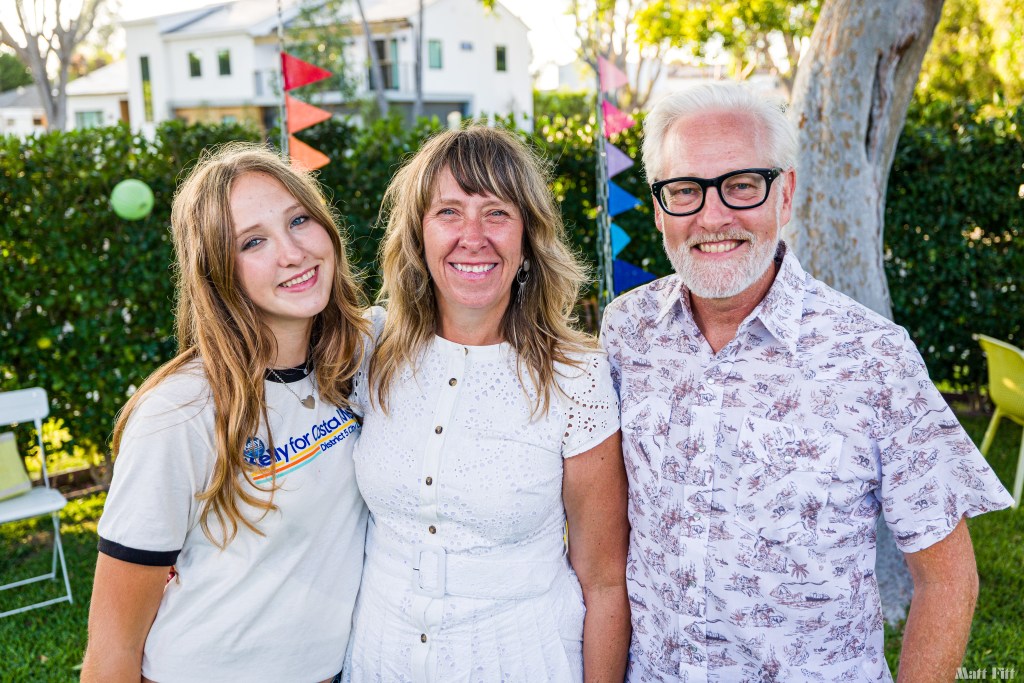
And I actually think, just to address the elephant in the room, I think that people who fly their gliders in the park is an important part, [and] needs to be an important part of the Fairview Park Master Plan. Right. So that’s what I will say about that. I also think it’s possible to find a solution where everyone can still have a place in that.
[Photo Credit: Kelly Brown for District 5 Campaign]
And so I do just want to acknowledge for a moment that there is a rumor going around that the Fairview Park Master Plan is moving us in a direction where it will remove access for people. And I just want to go on record and say that that is not true. Either a misunderstanding or a misrepresentation. It’s something that I would never support. But as far as I understand it, it’s also not something our Council would support. It’s not something that PACS has ever supported, right?
So for me, that’s what the Fairview Park Master Plan did, is it brought to surface the ways in which residents need a variety of different park opportunities in District 5. And I’m just going to acknowledge that it reminded me again why it’s important to talk about park equity issues.
So, you know, this is, I guess, one of the other reasons that I decided to run. I left it out of my intro, but you know, I raised my – we raised our daughter, I say, “I raised my daughter,” [but] we raised our daughter in a neighborhood without a park. And I’m going to be honest with what that meant for us. So I could either walk over a mile away, crossing many busy intersections to get to a big park. Or I could get in my car and drive to a park. And that’s what we did. And what that meant is that we live in a neighborhood where I’m constantly seeing so many parents push strollers and they’re just pushing them around, pushing them around – they’re not going anywhere. And it’s like, my gosh, you know, you want your kid to be able to get out, to play with others. I want to meet my neighbors at the park.
Like I love what’s at Brentwood [Park]. I want a half of that. I think a quarter of that. I want people with their dogs to be able to meet one another with their dogs and talk about – I don’t actually want dog fights. But you know what I mean? I want that interaction.
So Neighborhoods Where We All Belong, actually going back to that question, you know what would have got me out, as not a super citizen, is [a question] like, “what does your neighborhood need? As we’re developing, as we’re thinking about housing, what in addition to housing is important?” As I’ve been talking with people, [people have answered]: “dog parks, parks.” So that’s what the master plan also revealed is that, you know, the need for more, not more park spaces, but for those areas that don’t have it, how can we attend to that? And then how do we make sure that Fairview Park is preserved? And by that I mean the bluff doesn’t fall down so that we don’t have access to it, but also still a place for people to participate in vibrant activities, like Concerts in the Park.
Lessons learned from retail cannabis and Measure Q
Jenn Tanaka
Great, yeah. so then I’m going to move you into a different question, which I think has also been perhaps impacting District Five, which grew out [of] a different measure that happened a little earlier.
So in 2020, that election brought Measure Q, which was a ballot initiative to legalize retail cannabis sales in the city. And following that passage of that ballot initiative many retail cannabis locations opened, particularly several in District 5. Now, after some pushback from the residents and a lot of pressure on our Planning Department to open these retail cannabis stores, the City Council has capped the total number of stores at 35 citywide.
What I wanted to know is, because they’ve already done the cap and there’s been some regulation on retail cannabis, I was curious: what did we learn from this experience with retail cannabis that perhaps you could take with you onto the dais?
Kelly Brown
I really love this question. So thank you.
So I will acknowledge that I voted for [Measure Q], but I did so with some hesitation. And my hesitation was how it would actually play out at the landscape level, at the everyday life level as you’re walking your streets.
But I voted for it. And the reason I voted for it was for revenue, right? So that we could continue to support all of the programs that are happening in our city.
What my experience has been like with this is that I live now in a neighborhood where, when I walk out from my front door, within a half a mile, I can go and visit five different dispensaries. If you extend that to three-quarters of a mile, I can actually go visit eight. So what I’ve experienced, the way that I’ve seen this actually come into effect for the city, is an oversaturation in some neighborhoods.
And I did go on record at City Hall when there was going to be another dispensary coming into my immediate neighborhood. And the rhetorical question that I asked City Council [during public comment] is, I said to them, “I don’t know where you all live. And so maybe your experience is like mine. Maybe when you get up and you walk your dog in the morning, you walk by five dispensaries. Maybe that’s the Costa Mesa experience. And of course, it’s not, right?” And I don’t think we would want it to be.
So what I’ve learned is that as you’re thinking about this type of business, any type of business, the oversaturation in certain neighborhoods is something that we need to be on the lookout for. Again, if you lived in this neighborhood, if you lived in this neighborhood, stop and think about what it would be like. Try to imagine yourself as the other. That’s all I’m asking.
And that’s what I would bring to Council is like, stop and think about what it’s like to be that other person. It might not impact you, right? And I don’t feel like that happened.
And one of the frustrations, and it you can hear it in my voice, and now this is my acknowledgement for the record, is that, I would have loved to have been notified as a resident, both me and my neighbors, we didn’t get any notification of this. Maybe they’re not legally required, but this is just, like, what you want good government to do, right? I mean, these are businesses that my daughter can’t and shouldn’t go into, right? But it just changes the landscape of your lived daily experience. I would have liked a head’s up about that so that I could weigh in earlier.
So I think that’s what we’ve learned. That’s what we’ve learned. And that the other thing that we’ve learned is that there are other ramifications, right? So I will just share this. You know, it’s perfectly livable. However, you know, we’ve also grown accustomed to it – as we’ve seen the number of dispensaries rise in our neighborhood, I can say that we have more people driving through our neighborhood. So faster [cars], it’s louder, there’s more trash. Last night, as I was actually preparing for this, you know, we have our windows open because it’s finally nice and all we smell coming in through the window [is weed]. And it’s because we live by a major dispensary, a big one. And so what people do: they go, they buy what they need, they come into our neighborhood, they get their fast food, they smoke, they eat, they throw their trash out, and then they leave.
So that’s some of the experiences in Costa Mesa. I hope it’s not everywhere. But when I’m on Council, I will bring that lived experience. And then I’ll also be thinking about it. It’s like, well, maybe like, what does it seem like in someone else’s neighborhood where I can’t possibly imagine what it’s like because I don’t live there? So go and spend some time in the neighborhood. Be there in the morning, be there at night. See what it’s actually like.
Jenn Tanaka
So would you say then that one of the roles of city council or being a city council member is to not just think about the future impacts in terms of economics, in terms of maybe even the planning department, but also using your imagination to think forward what life would be like if you bring like a significant change like retail cannabis ended up being in your neighborhood?
Kelly Brown
Yeah. And I would go further and say: be a human being. Like actually be in your body. Think about what it’s like to be a mom or a dad. Think about what it’s like to be a kid. Think about what it’s like to be somebody in a wheelchair, whatever it is, right? This is what I mean about thinking about being the other. Not so that you can then say that you know it, but so that you can begin to reach out and to then decide, like, what else do I need to learn? I don’t know if that happened for this process.
You know, I know that other city council people don’t live in my neighborhood. So you know, this particular issue is probably very different for them. So that’s what I would say. Yeah.
Does Costa Mesa have a historic downtown, and how can we improve it?
Jenn Tanaka
Well, I’m going to move along then to a different question then, which is to talk about our historic downtown. So Newport Boulevard between 17th Street and 19th Street is considered Costa Mesa’s historic downtown. If you go to that area, there are actually small but present signs that say, Welcome to Costa Mesa’s historic downtown. I was curious, do you think that this is still the right way to think about that area?
Kelly Brown
Typically, like, “the right way” – I avoid language like that.
Jenn Tanaka
Sure, fair.
Kelly Brown
I think it is, I think thinking about that area as a downtown is appropriate because it is the historic part of our city. It’s one of the oldest parts of the city. So I think it’s fair to think about it like that. I will be honest, it doesn’t translate as that in my brain, though that’s actually my neighborhood, right? So I can walk there, and there are lots of things that I appreciate about it. So I think it’s an appropriate way [to think about it].
Jenn Tanaka
Okay. And thinking about how that area may change in the future, what do you view as that area’s challenges?
Kelly Brown
Yeah. Well, can I talk about what it has going for it first?
Jenn Tanaka
Sure, absolutely.
Kelly Brown
So one of the things that I love about that area is that it has all the bones of a downtown. Right. And it feels [like one] – if you can ignore the freeway, right? If you can ignore the freeway cutting it, it has those nice storefronts that are right on big sidewalks where you can actually walk like four people [across]. You can have a whole family walking, you know, hand-in-hand down it. That feels really nice to me.
It’s nice where it’s close to a lot of different neighborhoods, right? It’s close to a major library. It’s close to the Triangle [Square], so it has the Triangle, which has our movie theater. You know what? I feel like there’s a lot going on.
I mean, the challenges are that you have a huge freeway that ends in it, right? So you have people – and again, this is where the noise from my neighborhood comes from. We have the noise not necessarily coming into the city, but the noise heading out, right? And the summers are always really loud because everybody’s driving their very fancy, noisy cars and leaving and it’s like a speedway, right? So that’s a challenge for a downtown.
Like it’s, I think, if I’m right, I think it has the highest percentage of pedestrian and bike fatalities in the city, if I’m right? It has a high percentage. Let me try to be accurate. It has a high percentage, right? So my daughter is now babysitting. And ideally she would just walk from our house to where she’s babysitting, which is right on the other side. And it’s like, you don’t get to cross [Newport Boulevard]. I’m sorry, you don’t get to cross there.
So I feel like you know, I think the other, so it’s like the challenge of the traffic. I think the other challenge is that it’s Caltrans, right? So it’s not like it’s our control, that we get to decide.
I do think there’s possibilities though. And I think that especially with, like, the housing redevelopment, there’s some initial investment that’s happening in the area. I think that this would be a long-term plan, a big long-term vision and plan. And I’m interested in thinking about how this area and the Triangle, and then actually this the section that leads up to the [Donald Dungan] Library, like, what would it look like if you really reimagined that as a downtown? But these are big long-term plans.
And so I guess the other way I would think about it is that I would want – kind of like park access – I would want all the neighborhoods or many of the neighborhoods in Costa Mesa to have little downtowns. Like what would it look like if you were to think about parts of our city where it’s like, this is the little downtown in Mesa Del Mar or whatever it is, right? So that you have coffee shops and places to walk to and a park. So it just feels like there’s something to do and to mix with people, and it’s your own mini-downtown.
I mean, I guess that’s the other way I would think about city planning. So it doesn’t have to be one.
Jenn Tanaka
If you were elected, is that something that you would like to see the City Council take a lead on in terms of that kind of vision?
Kelly Brown
I hadn’t actually fully thought through all of that. I do think though that when you’re talking about redevelopment, those are the kinds of things that matter. It’s housing plus, right? And that’s what we heard at Fairview Developmental Center. It’s not just about units, right? It’s like, what is it like to live there? What does that community need there? So that’s something I would be, if other people on Council were interested, I would absolutely be game to work with them on that.
Kelly on improving public trust in local government
Jenn Tanaka
So coming out of District 5, kind of looking more citywide, because the city council, of course, governs the entire city, not just the district.
I was looking this summer at a poll from the University of California at Irvine. They polled Orange County residents, and one of the questions that they were asking them was, how do you trust different levels of government?
And one thing that jumped out to me was that only 4-in-10 of the respondents said that they had some level of trust in their local government. So I was curious what your reaction to that would be and what you think the city council could do to increase public trust?
Kelly Brown
I remember when that came out, [UCI] is really proud of that particular report. So I actually took this as an opportunity to revisit it. And some of the things from the report that I think are interesting that I want to talk about is – so in Orange County, there is more trust in local government than in national government, right? So [a] higher percentage of people trust local government [versus national government].
And that issue is less divided by party than some of the other issues that they polled, right? So that’s interesting, right? It’s like this nonpartisan kind of support for that. Still low. I, you know, take the point.
The issue that residents had in that poll is that they felt like local government wasn’t working for everyone. So they felt like it was driven by special interests and not everybody was winning.
And so I think that’s something significant and something to be aware of. And that’s something that if I were on City Council, I would be very attuned to, [and] about what it means to work for everyone and not just drive special interests. So I mean, anyways, just to say that.
[Photo Credit: Kelly Brown for District 5 Campaign]
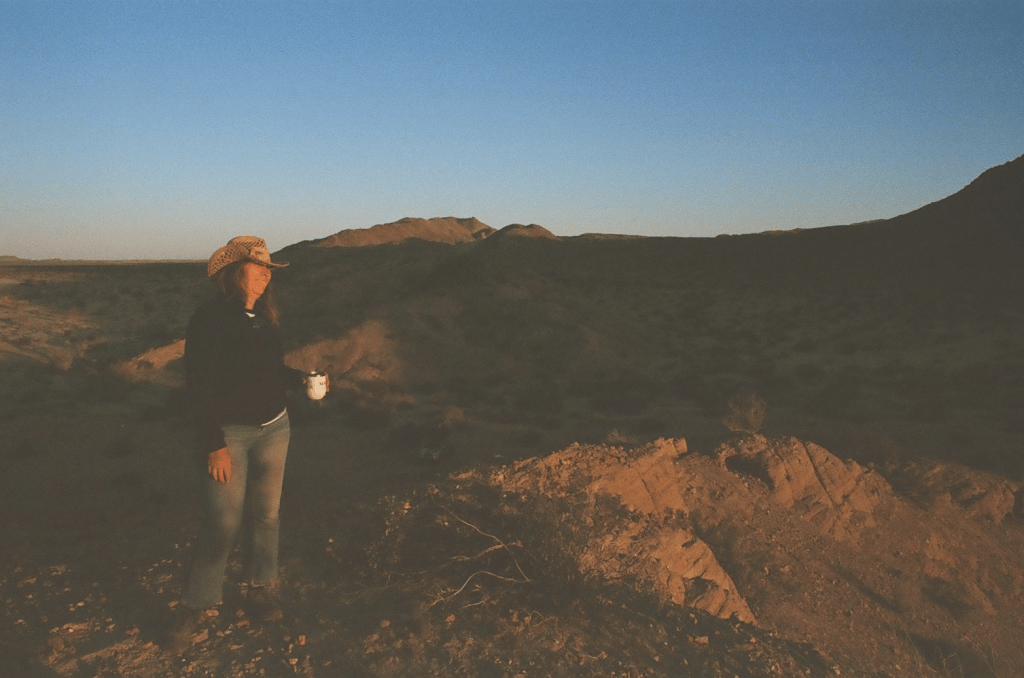
The other thing that the poll talked about that I found interesting and that definitely resonated with me as a mom of a teen is that younger residents were much more skeptical of traditional institutions. But they were not disconnected, not disconnected from civic life, right? So they were still very, like, plugged in. They just were super skeptical of institutions like a city council, for example, like local government.
And so the study also did this really interesting thing where it went from like the Boomers to, you know, [Generation] X, Millennials, [Generation] Z. And what it noted about Gen Z is that they had a lot of faith and belief in the grassroots stuff. So like local nonprofits. I think that’s something that I would be very aware of as I’m on City Council, especially as you’re thinking about communications, as you’re thinking about how to outreach, but really who. So to answer your question, I think that one of the things about being on City Council that I would want to prioritize is actually more engagement with younger folks, right? So I’m thinking like 30 and under, because that’s what that poll has actually identified as being an area of growth opportunity, right?
I personally think that’s important. I don’t think it’s just because I’m a mom, though I will just say as a mom, I actually care. Right. Like I want my daughter to feel like she – not that she feels like she can trust her local government, but she actually can trust her local government, right? And so I think that that’s something that I would take seriously.
I think it’s important to listen to people and to engage youth. And I’m going to give you one example where I’m starting to see this happen, or not happen: the whole conversation around Flock [Safety], right? So, did you see how many people turned out to our City Council to weigh in on that issue? The Mayor himself noted that in his entire time on Council, he had never seen as many people turn out to a City Council meeting as that one. And did you notice the demographics in the room? Young people care and they turn out when the topics matter to them.
What they ended up walking away feeling like though, is that they weren’t listened to. So actually in Costa Mesa, what just happened is we just played into all of the study that UCI just did, right? I do take that very seriously right now, and I will take that very seriously when I’m on Council.
And one of the things, I mean, I guess I’ll just share it now – if I were to win and if I were to be on Council, one of the first things that I would do probably in late January is to have a town hall on the topic of Flock. And that’s because it’s something that’s going to be on the agenda. And it’s very clear to me that people, not just young people, actually all people really care about this topic and they feel like they haven’t been heard. And I’m not going to get into the details of the Flock process, but legitimately they feel like they haven’t been heard. But how can we make them not just feel heard, but actually be heard?
What Kelly sees as the city’s biggest challenge in the coming years
Jenn Tanaka
So another question that comes to mind, and you know, maybe Flock is one of these issues, is: if you are elected, you’ll be there for four years. So the term is a four-year term. And looking forward into the future, what do you view as a significant challenge for the City Council in that time?
Kelly Brown
Yeah, there’s lots of them. I’m going to move off of Flock – Flock is really important, but there’s way bigger fish to fry here.
I think the major challenge as I see it is the budget and the need to invest in infrastructure. So our expenses are growing faster than our revenue. And the most recent facilities assessment has identified a great need to invest in infrastructure. How are we going to do that?
So I will say that I have some thoughts. I definitely – I have some thoughts on that. In talking with a lot of residents, I think there is a need to hold budget conversations or discussions that have long-term analysis and that go far beyond just year one and that involve multiple people at the table, to get impact. This is public engagement, right? So, how do you get local businesses? How do you get [the] development [community]? How do you get Travel Costa Mesa? How do you get some of the creative economy? How are those people being heard in order to help us potentially solve some of these challenges down the road? And again, it’s not to do what people say, it’s to get their input, right? So that we don’t need to be the only one solving this.
I think the second thing is that we need to develop some sort of assessment to identify where we can reduce costs and also where we can improve efficiencies. So through things like technology. So I think that’s a whole area [and] I find it particularly interesting. It’s like, when government works really well, it can do that, right? And so I would want to move us in that direction.
I think we need to make sure that we’re evaluating what we do. And this is something that I have felt on the Parks Commission, where I would love to have a better sense of how our programs are working. Not just numbers of people served – I mean, that’s one data point in terms of how a program is going – but, like, what’s the impact of this? I think we need some evaluation and we need to think about it across the city, right? And it’s not to kill people by having them do report after report after report, but to really identify, like, what kind of evaluation outcomes is it important for us to have as policymakers, decision makers in order to move the city in the right direction? So that’s something else that I would say.
And then I think we need to pursue grant funding that aligns with community needs. So for the past eight years, the budget has been balanced, right? We have [had] a balanced budget for the past eight years. Moving forward though, it’s going to be a challenge and we have a lot of needs.
What legacy does Kelly want on City Council?
Jenn Tanaka
And again, let’s think forward into the future that you’ve been successful this coming November and you’ve served out your four years on Council. What do you want people to say changed because you were representing District 5?
Kelly Brown
I have a big picture answer and then, like, particular things.
I think it’s going to go back to the question about the UCI poll and trusting government. Process really matters to me. So I would want people in my district, certainly, to feel like they’re more aware of what’s going on in the city, and that they trust [that] local government is working for them. And I’m not saying that it’s not or that they don’t feel like that. I’m just saying that’s what I would want.
I want them to feel like there’s a place for them to plug-in if they want. Many people don’t. Many people just want to go about their lives and do their things. I want them to feel like though, that when they needed to be listened to, they were listened to, and that they do trust in their local government, understanding their perspectives.
So I think that’s one big picture thing. The other big picture thing is a sense of pride. I want people to feel a sense of pride and connectedness, which is why, as I’ve been doing this campaign, for me, it’s all about bringing communities together in different parts of District 5. That community connectedness is something that I was really wanting when I first moved here. And I want it for everyone who wants that as well. So I think that’s what I would like is for people to feel a sense of pride, a sense of trust, connectedness, and that, you know, we’re all part of something larger.
And then like on the more granular level, I want, in my district, everyone to have a park within a seven or eight minute walk of their house. Doesn’t have to be anything fancy, but something where they can meet one another, where when the city wants to talk to people, they can actually come and meet them. I would like that as well. And, you know, gardens, gardens should be a part of that.
Rapid-fire questions
Jenn Tanaka
We’re getting towards the end here. So the last couple of questions I wanted to ask you are rapid-fire questions. So just tell me what comes to mind when you hear these questions. The first question I have for you is: is there a place in Costa Mesa that brings you peace or happiness?
Kelly Brown
My front yard. I have a really nice front yard. It has a huge jacaronda tree. I go out there to read. I go out there now to record videos for the campaign. It’s just really lovely. I have my dogs with me. But I’m also really aware – and this is why I want the park access – I’m really aware of how lucky we are to have it – you know, we live in a little house, but with nice yards. And I was especially thankful for that during [the] Covid[-19 pandemic]. So it was that moment where I was able to leave my house, and go sit in the front yard or go sit in the backyard, how fortunate I was and am for that little space. And again, we’re renters, right? So it’s our home, but we don’t own the house. But I find joy there.
Jenn Tanaka
Awesome. And thinking back about the time that you’ve lived here in Costa Mesa, is there a business or could also be an institution or tradition that we used to have that’s no longer with us that you really miss?
Kelly Brown
I miss Landers [Liquor Bar]. I miss, I could walk up, my husband and I would walk up to Landers and we’d get some food, listen to live music, and then just walk home. And it just had, like, a different vibe. You know, they were always bringing in interesting bands, totally like [a] mix of people. You have, you know, Jeff and I there, late 40s, 50s, alongside like the 20s somethings. I dug that. It felt hip and cool. And I was sorry that – and this actually gets to issues in the city – I’m sorry that they left and they’re, you know, rocking it somewhere else. Bummer for us.
Jenn Tanaka
Bummer for us for sure. And last question is what is the best kept secret about Costa Mesa that you’re willing to share with the audience?
Kelly Brown
This is the one question I don’t have an answer to. Like I don’t know. I feel like I guess that answer is so cheesy, but I feel like Costa Mesa used to be the best kept secret. Like, you know, it was like a place that not a lot of people I feel like had heard about. I think that’s changing. I don’t really have an answer to that one.
Jenn Tanaka
Well, I bet you do have the answer that maybe you don’t want to share, which is how I felt about the question.
Kelly Brown
What would you say?
Jenn Tanaka
Hey, I’m not getting interviewed, so… [Laughter].
Well, Dr. Kelly Brown, thank you so much for spending the time with us.
Kelly Brown
Thank you for this. So I just want to say I really appreciate what you’re doing. I recognize it’s a lot of work, both in terms of setting up the process, the editing, the hosting. So thank you for doing this. Really truly.
Jenn Tanaka
Thank you.

