
This interview with Steve Smith, candidate for Costa Mesa City Council District 5, took place on September 15, 2026, before the City Council’s meeting that evening on the draft Fairview Developmental Center Specific Plan. Mr. Smith works in technology and has lived in Costa Mesa for nearly 10 years. His opponent is Kelly Brown (read her interview here). The election is November 3, 2026.
Mr. Smith was interviewed by Jenn Tanaka for the Goat Hill Rodeo. Both candidates were asked the same questions in the same order, with topics shared 48 hours in advance and no prepared answers allowed. The transcript is close to verbatim, and the candidate reviewed it for accuracy only. To review the full rules, click here.
Published October 5, 2026.
Want to listen to this interview? Check it out on the Goat Hill Rodeo Podcast.
Table of Contents:
*** Begin transcript ***
Introduction
Jenn Tanaka
So today I am talking with Steve Smith, who is running to represent District 5. Welcome.
Steve Smith
Thanks for having me, Jenn.
Jenn Tanaka
Tell us a little bit about yourself, why you decided to run and what in your life and work in the city led you to run.
Steve Smith
So I guess it doesn’t get any more basic than this – I’m Steve Smith. I’ve lived in Costa Mesa for just shy of 10 years. And I came out here for work. I’m originally from the East coast. I went to school in Washington, DC. I lived there for a while after and then I went to Philadelphia and, when I got back home, I got a job out here. I came out here and I haven’t looked back. The weather, the people, everything is just so wonderful in Costa Mesa.
And in California in general, it’s, you know, it’s a slice of paradise.
Jenn Tanaka
What led you to want to run for City Council?
Steve Smith
So for a couple of different things, you know, on a surface level, you know, my opinion is, I don’t think that people in Costa Mesa are walking around right now saying that Costa Mesa is becoming a better place. I think there’s generally a sense in the community, that I feel as well, that Costa Mesa is taking on water.
But let’s dive in a little bit more into me and why I chose.
So for me, you know, maybe it’s kind of a broad answer to zoom in on, but my feeling is is that, you know, if you spend your entire life in pursuit of just, you know, work and profit and money and things like that, your life isn’t all that fulfilling.
[Photo Credit: Steve Smith for District 5 Campaign]
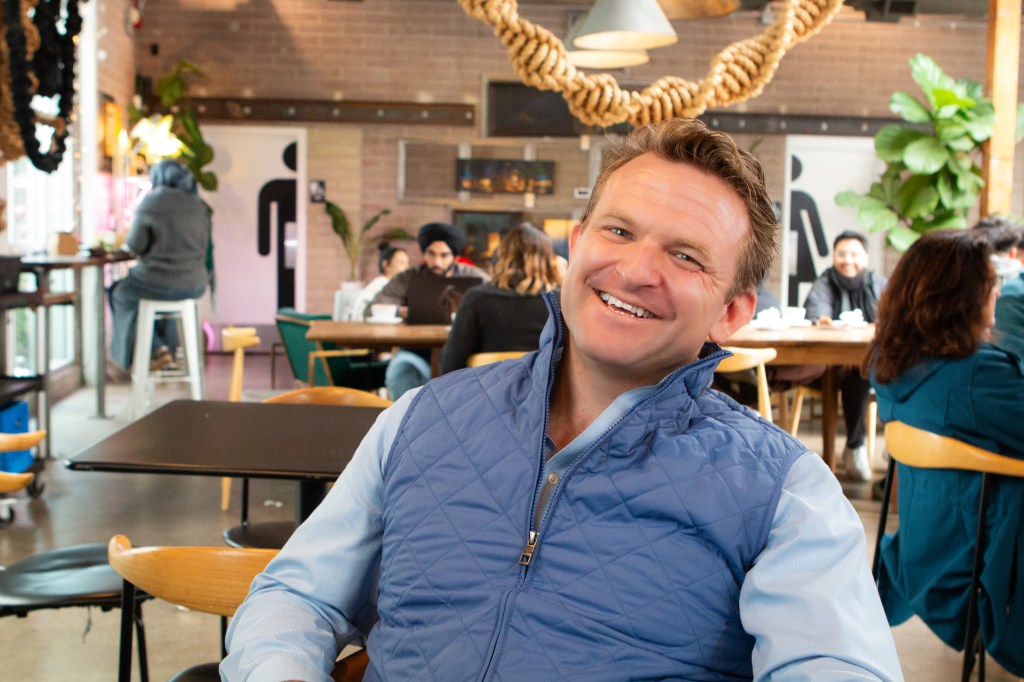
And so you one of the things I find is that, in order to kind of be a well rounded human being, you want to live you know, a spiritual life as well. And one of the things you also want to do is you want to give back to others.
And you know, being in Costa Mesa, I’ve really come to explore the issues during my time here. That isn’t something I’ve ever done anywhere else. I do love the electoral process that we have in America in politics. And I felt that that was an opportunity for me to kind of open up that side of me of giving back to my community. It was an interest of mine as well.
Reflecting on public outreach with Neighborhoods Where We All Belong
Jenn Tanaka
So to start off, I thought we would dive into some issues that I think might have come up in your discussions with future constituents potentially in District 5. A couple years ago, the city of Costa Mesa, as part of its housing element process, put forward Measure K, I believe on the 2022 ballot. And that passed narrowly, which allowed the city council to zone certain areas of the city according to the Housing Element, but also just give it more zoning control.
This led to the “Neighborhoods Where We All Belong” effort that they’ve been working on this year, which is part of this overall Housing Element compliance push. And through this process, it’s committed a significant number of properties along Harbor Boulevard, Newport Boulevard, and West 17th Street to providing more housing opportunities. So what I wanted to ask you about this process was, how do you think that the outreach process for this effort has gone?
Steve Smith
My feeling is that, and I don’t mean to kind of undermine the premise of the question a little bit, I don’t want to be uncooperative, is I think that if we had been more timely at the beginning of this process, we could have explored each of these solutions in greater detail.
“Neighborhoods Where We All Belong” has been just one big blast. And that there’s so much all at once. Whereas if it was broken down project-by-project, which a lot of other cities in California have done – and did earlier on than we did; we’re, you know, comparatively late in this, as you know – that we would have that, this wouldn’t have been that the outreach, wouldn’t have been I I think as unsuccessful.
Jenn Tanaka
So I just wanted to key in on what you said about it going project-by-project. The rezoning process is wrapping up and may well wrap up before the election in November. So assuming that it goes as it has been going, where they will rezone according to the Housing Element – as these sites begin attracting investment and development, what should residents expect from the city in terms of notice, input and transparency before a project is approved?
Steve Smith
I think that the options available within the project should be more clear up front. As we’ve seen with – I realize Fairview Development isn’t technically part of Neighborhoods Where We All Belong, but – what we’ve seen there is is we’ve seen it was sort of formulated, and then blasted out. Whereas, you know, if the kind of options that the city was considering had been available earlier on, then the input would have been, sort of, gotten to the city in a more timely manner and people would have felt more involved in the process.
Jenn Tanaka
You’ve said a couple of times that the process has been blasted out. Could you maybe expand on that? Is there a way that you would have preferred the city to have handled the outreach process on these rezonings?
Steve Smith
Well, I think the actual mechanisms that the city has used, I know some people don’t feel great about it.You know, with mailers and sort of reaching out through social media, I don’t think anyone’s going to be 100% happy with that. But you know, again, my feeling is that if, instead of when I say blasted, what I mean by that is, the sort of whole element is coming all at once at us, right? Whereas like I mentioned earlier with other cities, it had been more piecemeal, right? So my feeling is that if it had been more project-by-project, then it wouldn’t have been one big wave like it was.
What Steve learned about District 5 parks from the Fairview Park planning process
Jenn Tanaka
Then moving on to a different topic. Another process that the city has been going through in the last year, two years really, maybe more, is the update to the Fairview Park Master Plan. And that process is wrapping up, I believe this fall. It may also be something that wraps up before the election. And since I think, I’ve been certainly following it closely, I don’t know how closely you’ve been following it, but I was curious, depending on how close you’ve looked at this – what did that process reveal to you about District 5’s park needs generally? Because Fairview Park is situated in District 5.
Steve Smith
So I know there [are] some feelings from people in District 5 that there are a lot of parks on the westside, but not as many on the eastside. I do think that there’s a healthy appetite in the city for that.
That said, I don’t think that in the city we should look at parks from a perspective of districts. In 2030, the US is going to have a census. The consequence of that will be to redistrict the city in 2032. So then the district won’t even be shaped the same anymore. So for me, when I look at something like parks that you know, parks in Costa Mesa, I look at it as, are there enough parks for the entire city, right?
It’s pretty clear to me that there is an appetite for more sort of green space and open parks in the city.
Can you ask the question again? I’m sorry.
Jenn Tanaka
Reflecting on the process, reflecting on the people that maybe you’ve talked to through campaigning, what has that revealed to you about the needs for park space generally? And maybe a better question would be: where does either improving the park space that we have, or finding new park space, fall in your priority list?
Steve Smith
I think the city has a number of issues, but one of them to me is to protect Fairview Park. As I’ve sort of reviewed the history of Fairview Park and Costa Mesa, there’s been a great appetite to do different projects with it. And my feeling is, why can’t we just leave it alone? I think a lot of people love it as it is, the way it is.
And so more than anything else, I do feel that in terms of the process, I would say that this touches on your other question a little bit, is I think that more people would have liked to have seen the cards that the city was working with on Fairview Park. The Fairview Park Master Plan Update represents a very fundamental change to how Fairview Park is governed. And I think people want to be more part of that.
Jenn Tanaka
Maybe also to touch on the other part of the question that you brought up, which is that the parks may live in one district, but people go across district lines, obviously, to visit different parks. Have you gotten a sense of what you think the overall city’s needs are with respect to parks, either what we do in them, what they’re for, or how many we have?
Steve Smith
Can you ask that one more time?
Jenn Tanaka
Sure. So where I’m getting at is, reflecting on this question, do you think that we have enough park space in the city? Should we be seeking out more? And do you think we’re utilizing the park space that we have the way that Costa Mesans want us to be doing it?
Steve Smith
I think there is space for more parks, but that said, I mean, I think that we do have a number of spaces already. I go to Canyon Park and I go to Fairview Park quite a bit and some others as well.
Steve on the city’s experience with retail cannabis and Measure Q
Jenn Tanaka
We started with Measure K. I want to go back a little further to Measure Q. So that was a measure that was passed in the 2020 election, and that brought the legalization of retail cannabis sales in the city of Costa Mesa. And many locations opened across the city following that measure’s passing, including several that are located in District 5.
Now, following the process of opening those stores, the City Council more recently decided to cap the number of stores at 35 citywide. What did we learn from this experience in your view? Did it teach us anything as a city?
Steve Smith
Well, I don’t think the city [has] realized the revenue that we wanted to realize from that. And I think that tells us something. And the, kind of, flood the city approach, I think that clearly hasn’t worked. And you know, I’m not a big lover of pot shops. That said, they’re here now, so they’re here to stay, so they’re a part of our city. But I think the volume of them is what really speaks out to me and to a number of residents.
Jenn Tanaka
So do you think there’s anything that the city has learned from this experience or that maybe you have learned that, if you were elected, you would carry with you from watching how that process unfolded?
Steve Smith
The city has, in a number of different areas, has explored the pilot program as a way to explore new initiatives for the city to undertake. And we just jumped in the pool with Measure Q. So I think we could have, you know, taken that sort of pilot approach and then grown it and seen where it would have been a healthy number of pot shops for the city.
Does Costa Mesa have a “downtown”?
Jenn Tanaka
I think I’ll move on to a different question then, which is more about land use and kind of your vision for the city in the future, Newport Boulevard between 17th Street and let’s say 19th Street is considered Costa Mesa’s “Historic Downtown”. If you go down there, there’s actually signs that say “Historic Downtown”. Do you think that this is the right way to think about this area of the city still?
Steve Smith
I think that, kind of the way Costa Mesa grew, Costa Mesa is more of a lump than a sum, right? Newport Beach is a sum, Irvine is a sum. Costa Mesa has kind of grown up around – there’s a clear industrial area, there’s residential, there’s sort of “downtown” . And I mean, even up Harbor Boulevard, there’s sort of “town-y” areas.
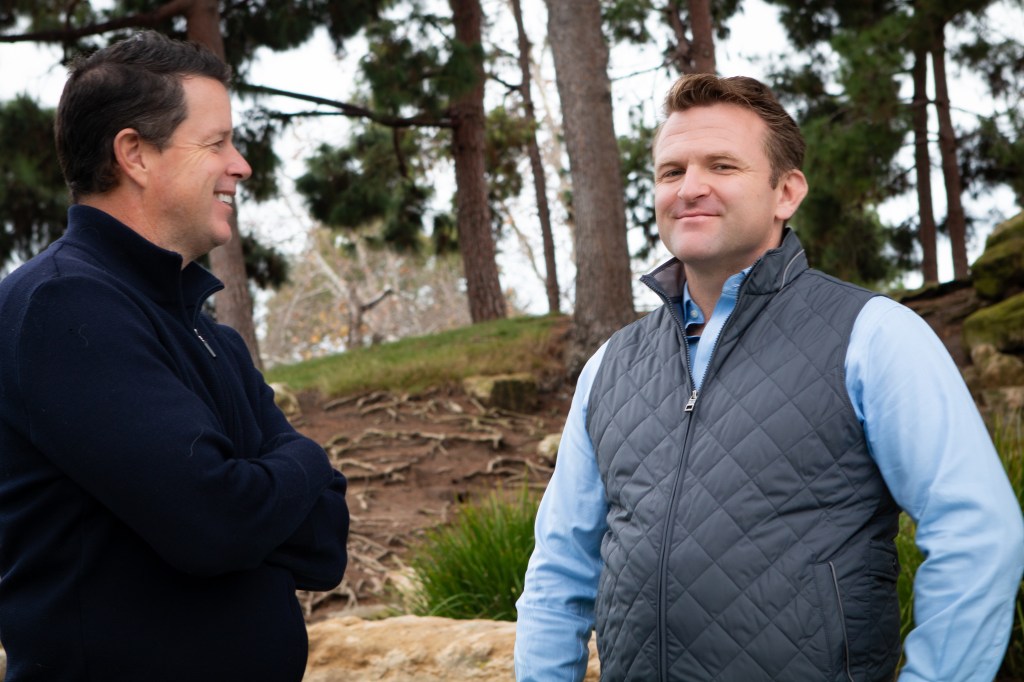
No. Given the way the city has sort of grown, that’s probably not the proper downtown. And especially as long as it lacks parking, I think that’s the big problem for that area. it’s you know, it’s going be stunted in the bud a little bit.
[Photo Credit: Steve Smith for District 5 Campaign]
Jenn Tanaka
I guess one question that brings up to me is does Costa Mesa have a “downtown” then? In your view?
Steve Smith
Well, I mean that’s just that’s just an opinion, right? I would say there are three or four clusters, not really one–
Jenn Tanaka
Downtown area?
Steve Smith
I mean again, that [area of Newport Boulevard] technically is, but…
Jenn Tanaka
Got it. And you mentioned that one of the challenges of that area is parking. Could you maybe expand? Are there any other challenges or maybe opportunities that you see in that area for development, improvement?
Steve Smith
What stands out to me is Union Square in San Francisco. And in the late 40s, early 50s, they had a similar problem – lack parking, the malls were growing up around San Francisco that were consuming that retail and shopping space. And they added sort of a two-story underground parking.
That leads us to the question actually, well, where are we going to get the money to do that? Is there a developer who wants to do that? Can the city provide them the incentives to do that? And those are big questions, and, you know, they’re very difficult to explore because there are, kind of, all sorts of variables involved. But that said, I do think it would be a great opportunity for Costa Mesa to grow that area. And the first step would be to add parking.
Jenn Tanaka
And just staying on transportation then they also have to get there. What are your views of Newport Boulevard? Which is an interesting road that, you know, obviously bisects the city and also is not fully under our control because it’s also part of the state highway system. So Caltrans has some control over that corridor.
What do you see as the positives and negatives of Newport Boulevard running down through that area? And is there anything you’d want to see changed about that road itself?
Steve Smith
I’m not familiar with the control that the state has over that road versus what Costa Mesa has.
Jenn Tanaka
Let’s assume we had control over it, just for the sake of the question.
Steve Smith
Can you ask the question again then?
Jenn Tanaka
Sure, let me put it this way: do you see any challenges that Newport Boulevard, the street itself, faces or poses to getting that development, getting that investment in that area, or do you think that it’s a positive because it brings so many people through our city at the you know, at the same time?
Steve Smith
Well, it represents an interesting opportunity to kind of capture – one of the problems with the way it’s structured, it’s clearly like, “let’s get to Newport,” you know? because a lot of people want to go to Newport, and that’s a great opportunity for us to sort of pull some of that in.
So and that kind of the eclectic, kind of the weird way it, it turns like that too [gesturing, indicating the awkward way Newport Boulevard intersects Harbor Boulevard], makes that even more challenging.
Can you ask that one more time?
Jenn Tanaka
Sure, yeah. No, I think you answered it, which is that I was trying to understand how you viewed the street itself, because there’s the developments around that area, but then there’s also Newport Boulevard itself, which some people have described as being somewhat challenging because there’s a lot of through traffic. Right. It causes a lot of noise and maybe exhaust, as well as there’s some it’s one of the higher – it’s one of the difficult streets with respect to traffic crashes.
Steve Smith
Well I avoid it at all costs, so. [Laughter]
Jenn Tanaka
Well, there you go. If you avoid it at all costs, I guess what I would say is, why do you avoid it at all costs? And do you see that as a challenge to developing that area?
Steve Smith
I avoid it because it’s a time suck, you know, it’s just traffic and that’s just the way it’s structured.
Jenn Tanaka
Got it. And that was something that we would need to address before we can…?
Steve Smith
My feeling again is, as long as there isn’t sufficient parking in that sort of area, it’s going to be a struggle for us to really change the character of that street in any way to make people want to spend any time there.
Jenn Tanaka
Got it. And just the last question on this then is, do you have any ideas or any approaches to how to improve parking, maybe working with local businesses there or trying to bring in outside investment to build more opportunities for parking?
Steve Smith
Well, I mean, so there are two approaches to expand parking, right? Especially in an area like that. One is to go down, one is to go up, right? So and again, I don’t mean to keep drilling on this simple thing, but until we can change the parking situation there, nothing else is really going to change about that area.
Jenn Tanaka
Okay.
Steve Smith
The other thought there too is, if you look at, I don’t feel that the Newport Plaza and Triangle Square are sort of resounding successes. For example, let’s propose for a minute that, you know, we go down, you know, Newport Boulevard a couple hundred feet and we do another Triangle Square, right? We’ll go two levels under. Is that going to benefit the city? Do we want another Triangle Square there? You know, so it’s really,just the geography of that area makes it really complex.
What Steve thinks the city should do to improve public trust
Jenn Tanaka
Got it. Great. Well, then let me switch gears a little bit to more what I would describe as citywide questions, which the first one is: I was reading this summer, there was a poll that was released from the University of California at Irvine that was polling Orange County residents about how they felt about different parts of their government. And in that poll, 4 in 10 of the respondents said that they trusted their city government, which means 6 in 10 did not trust their city government. So I was curious what your thoughts might be about what the City Council could do to improve the public trust?
Steve Smith
[Chuckling] Well, I work in technology. I think the website is a Byzantine labyrinth. It’s not easy to figure out what’s going on in the city through the website. You know, if I was king for a day, boom: I would change that website so it’s simpler to explore. You know, a lot of the financials of the city are put into PDFs that you can’t even search against.
More information is the way to restore trust in government.
Jenn Tanaka
Could you maybe expand on how better transparency translates into better public trust?
Steve Smith
Well if you can see through the city then you know what’s going on in it.
Jenn Tanaka
Okay, sure.
Steve Smith
I mean, you don’t sound satisfied with my answer here.
Jenn Tanaka
No, it’s not that, it’s — I guess I’m wondering how you think about transparency, how it connects to how people feel about their city. It sounds like you have a background in technology. And so I was curious about your own response to perhaps, as you’ve pointed out, that the website maybe is not as strong as it could be. Does that undermine your feeling with respect to, that the city is not as being as transparent as it ought to be? How does the technology being improved really improve people’s feeling that they can trust their city government?
Steve Smith
I would say that is because they can see and search and understand more clearly the operations of their city government.
Jenn Tanaka
Understood.
Steve Smith
I mean, the city could always have more town halls. There’s definitely an appetite for that. I felt that the Fairview Development Center Town Hall, the one before the one that John Stevens just did. My feeling was, and I think a lot of residents felt the same way, is that it was a staged managed, sort of sales pitch.
If that process had been inverted so that the people asking questions had more control over the sort of the dialogue, then I think that approach would have, so to speak, moved the needle on public trust.
[Photo Credit: Steve Smith for District 5 Campaign]
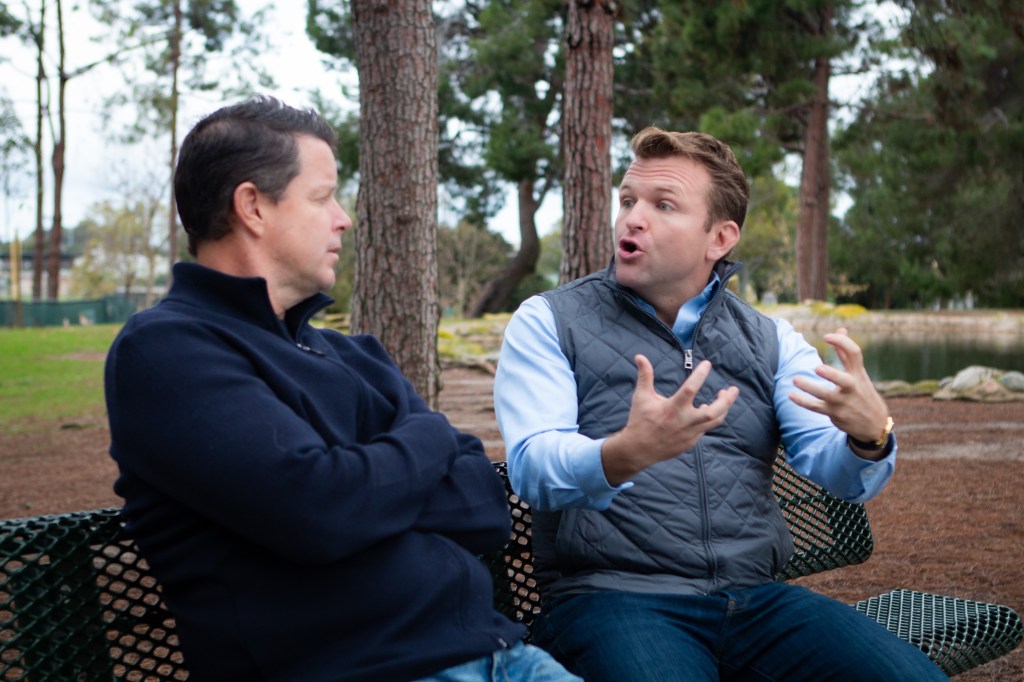
There were a number of, strategies I observed, that it felt like we were being sandbagged a little bit, so.
What Steve sees as the city’s biggest challenge in the coming years
Jenn Tanaka
Got it. Okay. and then if you are elected to represent District 5, you’ll have a four-year term. So looking forward to the future, based on what you know, what do you think is a significant challenge the city is probably going to face in the next four years that the City Council will have to tackle?
Steve Smith
I think we’ve got a difficult financial situation. And my feeling is the best way to address that is to change the relationship that the city has with businesses. My feeling is, and again, I think a lot of people feel the same way, that there’s a conflict-oriented relationship between the city and ambitious people who want to either work [or start a business] in Costa Mesa, who live and want to work in Costa Mesa. Red tape kind of kills a lot of good ideas.
The city’s number one source of revenue is the sales tax. So our ability to sort of work our way out of our financial difficulties is going to be largely dictated by our ability to increase the sales revenue.
And you know, word is getting out, I think. I mean, if you drive down Harbor Boulevard, I think it’s fair to say there’s definitely a number of vacant retail spaces there that represent lost opportunities for the city.
Jenn Tanaka
So just to follow up on that, what do you think that the City Council should focus on doing in order to address these issues that you raised?
Steve Smith
So I guess it wasn’t clear.
So the city needs more money. So by changing the relationship that our city has with businesses, more businesses will want to come here. So for example, let’s talk about Measure C a little bit. What I’m a little surprised by with Measure C is that we have a competitive advantage to draw businesses to Costa Mesa. And right now, when you drive down Harbor Boulevard, they’re not coming here, right? Because of all the vacancies.
So that should tell you something about the way that we’re doing business and where we’re transacting our business with businesses that want to come to the city.
Jenn Tanaka
Yeah. And I appreciate you bringing up Measure C. Could you maybe tell the audience what Measure C is and where you think it could help or not help the city?
Steve Smith
Well, measure C is a business licensure tax. Businesses in Costa Mesa have to pay a yearly tax to operate here. And Measure C is the proposal to increase the tax that the city currently levies on businesses.
Jenn Tanaka
And do you think that this is a step forward to putting us on a more financially stable path?
Steve Smith
I don’t agree with the approach, as I mentioned before. But I mean it’s certainly going to help us realize more money if it passes.
What Steve wants his City Council legacy to be
Jenn Tanaka
Let’s assume that you’re successful in November. What do you want people to say at the end of your term, what do you want people to say changed because you were representing District 5?
Steve Smith
I want them to say that, that I left Costa Mesa a better place than I found it. That it’s a better place to do business, a better place to live, and a better place to enjoy yourself.
Rapid-fire questions
Jenn Tanaka
So we have been ending these with some rapid fire questions. And I just wanted to go through those really quickly with you. And you can answer these kind of just off the top of your head. So the first question is: where in Costa Mesa, what’s a place in Costa Mesa that brings you peace or happiness?
Steve Smith
Canyon Park, when you kind of go down in the ravine there. I have my dog Kylie, I take her there a lot. and it’s a nice place to go and, yeah, I love it down there.
Jenn Tanaka
Awesome. And I was curious if there was a favorite business or maybe an institution or tradition that used to be in Costa Mesa that’s no longer with us that you really miss?
Steve Smith
I wish the fish fry were still in Fairview Park.
Jenn Tanaka
Did you go there when it was in Fairview Park?
Steve Smith
Yes.
Jenn Tanaka
Ok cool. Then what is the best kept secret about Costa Mesa that you’re willing to share?
Steve Smith
I’m ashamed to say I can’t remember the name of it. There’s a great sushi place on Harbor Boulevard. I think it’s Harbor and Baker [Street] there by Nekter. It’s a great kind of little homey sushi spot. Love it.
Jenn Tanaka
That’s the place, that’s the spot.
Steve Smith
Yeah.
Jenn Tanaka
Okay – so go head up Harbor Boulevard and get some sushi. All right, great. Well, thank you so much for your time, Steve. I really appreciate you sitting down with me.
Steve Smith
Thank you.

